
GeForce NOW adds native Linux support, finally acknowledging the OS exists
NVIDIA announced native Linux and Fire TV apps for GeForce NOW at CES 2026, alongside RTX 5080 performance upgrades and flight stick support.
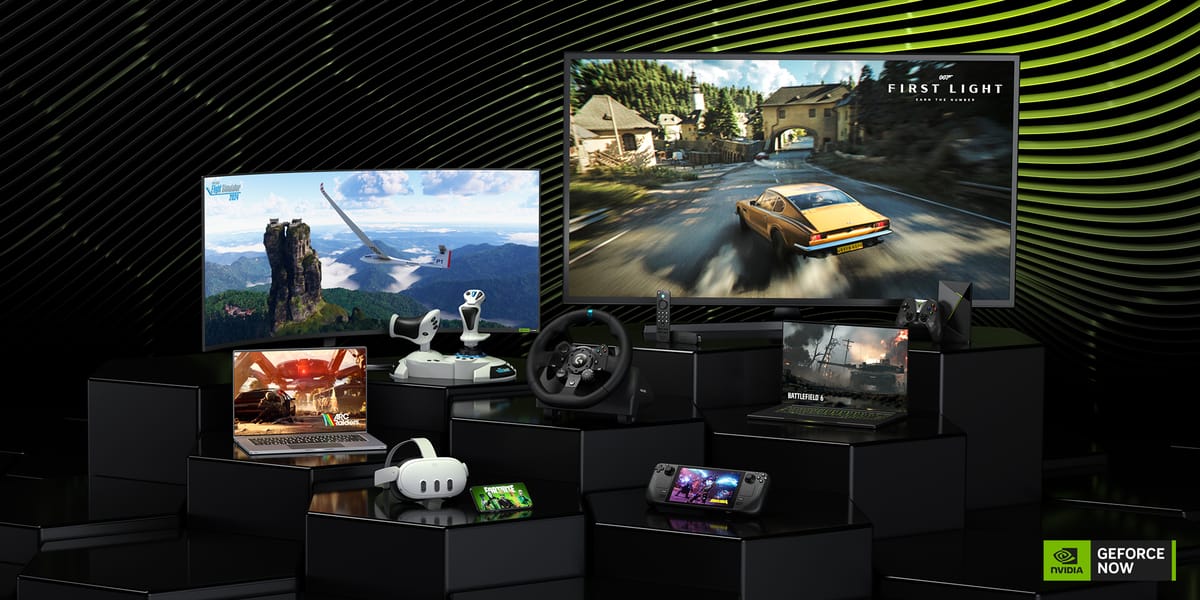
NVIDIA has officially announced native GeForce NOW applications for Linux PCs and Amazon Fire TV sticks during its CES 2026 presentation. According to the announcement post, these new platforms will have access to the service's upgraded RTX 5080-class performance tiers, which utilize the new Blackwell architecture.
The update brings the cloud streaming service to a dedicated Linux client for the first time. Previously, Linux users had to rely on browser-based streaming or third-party workarounds to access their libraries. This native application suggests NVIDIA is finally taking the open-source operating system seriously as a consumer gaming platform, or at least seriously enough to port the client.
Technical Specifications
The backend hardware has received a significant bump. NVIDIA states that the new Ultimate membership tier is powered by GeForce RTX 5080-equivalent servers. These rigs are capable of streaming at up to 5K resolution at 120 frames per second. For competitive players who prioritize fluidity over pixel count, the service supports up to 360 fps at 1080p when using NVIDIA Reflex technology.
The expansion to Amazon Fire TV sticks is arguably the more mass-market move. It allows a standard HDMI dongle to function as a high-end PC, assuming your internet connection can handle the bandwidth requirements. It is a neat trick for turning a hotel TV into a gaming station, though latency over hotel Wi-Fi remains a variable NVIDIA cannot engineer away.
Peripherals and Preservation
Simulation enthusiasts will appreciate the addition of proper flight control support. The update enables the use of flight sticks and throttles for titles like Microsoft Flight Simulator 2024 and Elite Dangerous. Cloud gaming has historically struggled with non-standard USB peripherals, so this is a welcome step toward feature parity with local hardware.
The service is also integrating single sign-on for Battle.net and Gaijin.net accounts. This change removes the friction of typing complex passwords with a controller every time you launch War Thunder or Diablo.
While cloud gaming often draws skepticism from preservationists due to the lack of ownership, there is a practical hardware angle here. A native Linux app allows aging laptops and desktops to run current-gen titles like the upcoming 007 First Light or Resident Evil Requiem without requiring a hardware upgrade. Keeping a ten-year-old ThinkPad in service by offloading the heavy lifting to a server farm is a valid form of hardware preservation, even if the software remains ephemeral.


Comments ()