
GammaOS 1.5.0 launches for the Retroid Pocket Duo Lite
GammaOS 1.5.0 is out in early access for the Retroid Pocket Duo Lite, adding native DS and 3DS emulators, a 3DS-style menu, and faster boot times.
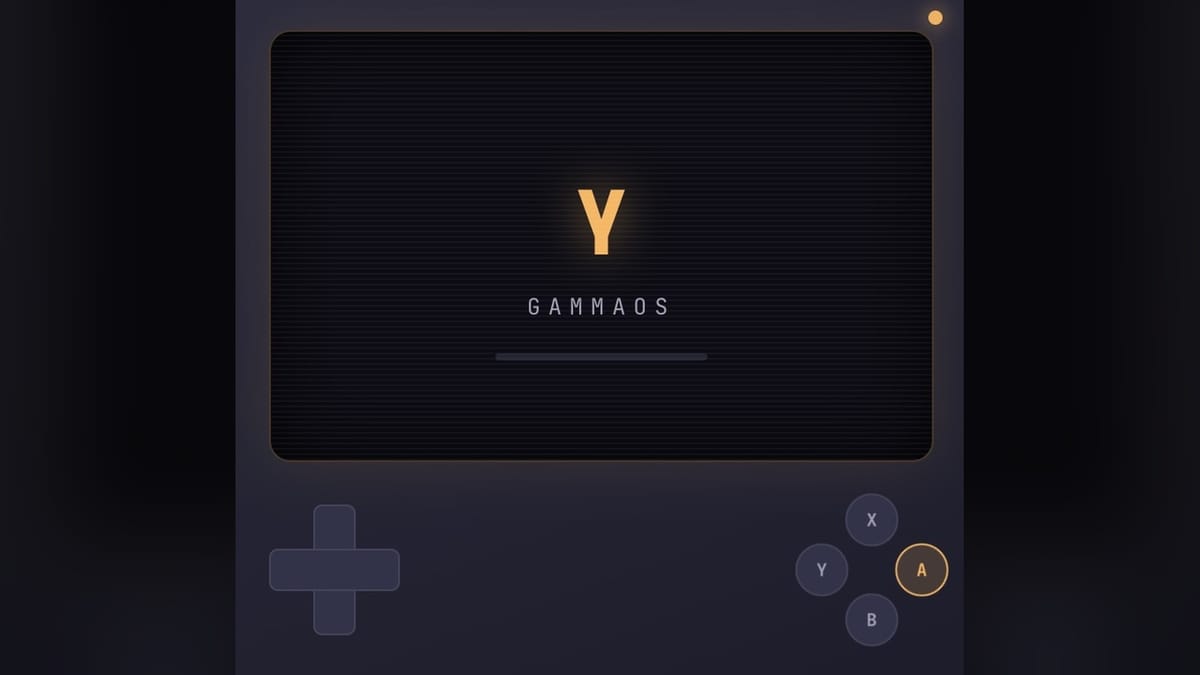
Solo developer TheGammaSqueeze has released GammaOS 1.5.0 in early access for the Retroid Pocket Duo Lite, expanding the custom firmware across a wider lineup of retro handhelds.
The build previously entered private beta in late October to address stock 3DS performance bottlenecks on Retroid's budget clamshell, which began shipping on September 17 at $149 for the 4GB/64GB model and $169 for the 6GB/128GB tier (and is discounted to $99 during Retroid's November 25 to 30 Black Friday sale). Following the project's usual release schedule, version 1.5.0 is available first to Patreon and Ko-fi backers before becoming free to everyone on GitHub in 60 days.
Skipping the Android middleman
GammaOS is a custom Android firmware that replaces poorly optimized manufacturer software on budget gaming handhelds. TheGammaSqueeze started the project in May 2023 on Android 12 to fix global screen oversharpening, 60 Hz display bugs, and battery drain on Anbernic's Unisoc T618 devices like the RG405M and RG505.
Since then, the software has grown into GammaOS Next (an Android 14 generic system image based on LineageOS 21) and added GammaOS Nano, a native C++ console frontend that supports 30 handhelds across 10 manufacturers, including the Anbernic RG DS, TrimUI Brick, and GKD 350H Ultra. Instead of wrestling with standard Android overhead, Nano bypasses the OS compositor entirely and renders straight through Linux DRM drivers. That shortcut drops cold boot times from roughly 168 seconds down to 27 seconds and cuts game launches from 22 seconds to around 6 seconds on 1 GB hardware, saving you nearly three minutes of staring at a boot logo wondering if you bricked your new toy.
Two screens, zero dropped frames
On the Retroid Pocket Duo Lite, which pairs a 5.5-inch 1080p top panel and a 4.2-inch 1280x960 bottom touchscreen with a Qualcomm Dragonwing QCS6125 chip, GammaOS 1.5.0 brings direct dual-screen driving, proper lid sleep and wake behavior, and a Control Center tied to the Mode button. The headline additions are three built-in native emulators tailored to bypass standard Android app overhead:
- azahar-nano: A Nintendo 3DS emulator that runs each display panel on its own real-time thread, hitting a locked 60 of 60 frames per second in games like Super Mario 3D Land and Mario Kart 7 where the standard Android app hovered between 51 and 55 fps.
- melonds-nano: A Nintendo DS and DSi emulator with a custom Vulkan renderer that holds 60 fps at 4x resolution (even on 1 GB devices like the Anbernic RG DS Plus) alongside DraStic Nano support and offline-queued RetroAchievements.
- RetroArch Nano: A direct launcher that boots RetroArch cores without opening the full Android application first.
I'm curious to see how well that dual-thread trick in azahar-nano holds up in heavier late-era 3DS titles like Kirby: Planet Robobot or Metroid: Samus Returns on the QCS6125, especially since stock firmware struggled to keep pace at 2x resolution.
A 3DS home menu and modular updates
Version 1.5.0 also overhauls the visual interface with two new home themes. The default GammaOS look borrows its layout from sister project GammaOS Pico, while the new 3DS Menu option arranges your library into a Nintendo 3DS-style grid complete with custom folders and per-game top-screen banners.
Rounding out the release are second-screen media playback controls and a system-wide Screen Calibration tool equipped with 12 test patterns, which is practically mandatory given how wildly panel lottery varies on sub-$170 handhelds. Best of all, the home UI and built-in emulators are now modular, meaning you won't have to re-flash a full system image every time an emulator gets patched.


Comments ()