
Fantasy Zone just turned 40 and Opa-Opa still needs a TV show
Sega's pastel-colored arcade shooter launched in March 1986. It brought a shop system and bright graphics to a genre obsessed with dark space stations.
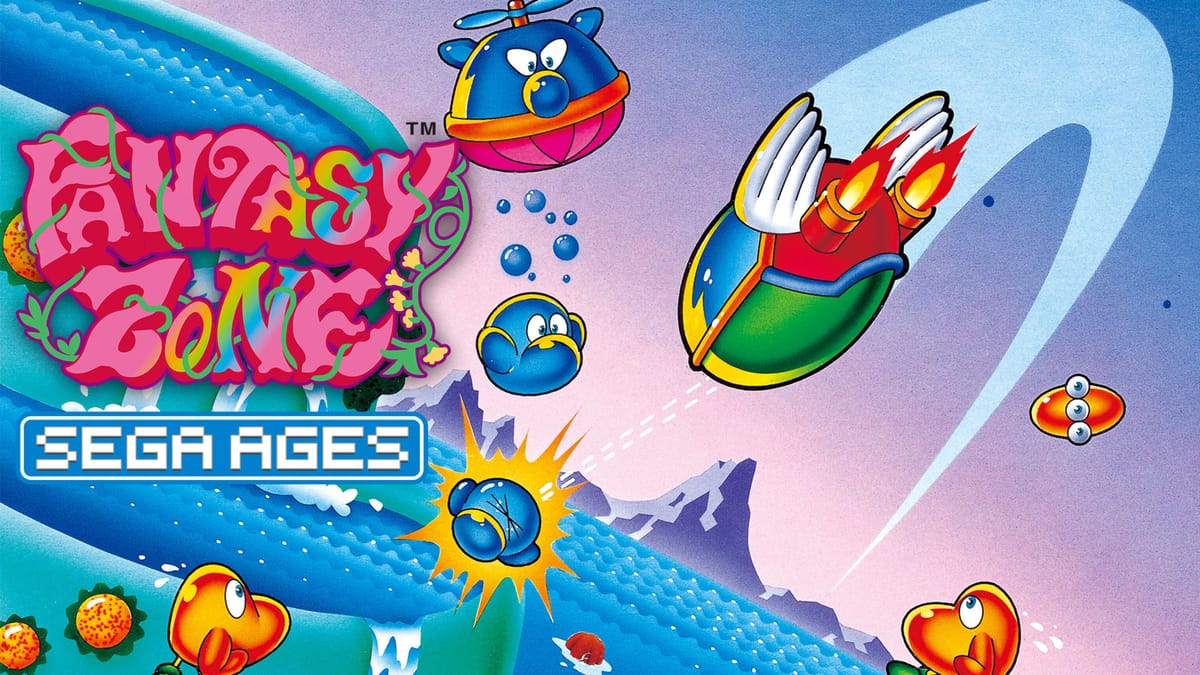
Sega's arcade shooter Fantasy Zone turns 40 years old this month. The original coin-op cabinet launched in Japan in March 1986 on the Sega System 16 hardware.
I discovered the game a few years later on the TurboGrafx-16. Bits Laboratory developed that specific port, with NEC Avenue as the Japanese publisher, and it was a completely fresh take on the shooter genre for me. I was thrilled when I realized my favorite game at the time, Space Harrier, took place in the exact same universe, though Fantasy Zone director Yoji Ishii later dispelled this unofficial connection in a 2014 interview. It makes perfect sense in retrospect. The arcade announcer literally yells "Welcome to the Fantasy Zone" when you put your quarter in to play Space Harrier. I still think this weird universe of checkered floors and sentient spaceships deserves a movie or an animated TV series. The lore is surprisingly deep for an arcade game about shooting giant floating fish.
The Sega Ages release of Fantasy Zone on Nintendo Switch.
Pastels instead of deep space
Director Yoji Ishii wanted to make something that looked completely different from the competition. Most shooters in the mid-1980s copied the dark, mechanical aesthetic of Namco's Xevious or Konami's Gradius. Ishii pushed his team to use bright pastel colors and cute enemy designs. The player controls Opa-Opa. He is an egg-shaped ship with wings that sprouts little feet and walks when he touches the ground.
The System 16 board allowed for a massive color palette and complex audio. Programmer Shuichi Katagi used that hardware to fill the screen with moving objects without slowdown. Composer Hiroshi Kawaguchi wrote a soundtrack heavily influenced by Latin music and samba. It sounds nothing like a traditional space shooter. The music matches the bright visuals perfectly, creating a cheerful atmosphere that tricks you into letting your guard down.
Buying your way to victory
The gameplay loop borrows the free-scrolling movement of Defender. You fly left or right at will, hunting down ten enemy bases to trigger a boss fight. Destroyed enemies drop coins of varying values. A red balloon occasionally floats across the screen. You fly inside to spend your money on faster engines, better lasers, and heavy bombs. You have to manage your economy carefully. Buying the jet engine too early might leave you broke when you really need a 7-Way shot for the next boss.
The cute graphics hide a brutal difficulty curve. When you die, you lose all your purchased upgrades and revert to your slow default speed. The prices in the shop also increase every time you buy an item. A Twin Bomb costs 1000 gold the first time, but the price doubles for subsequent purchases. The bosses are massive sprites that take up large portions of the screen. You fight a giant snowman, a cluster of green leaves, and a heavy piece of wood that shoots lasers. The final boss is actually Opa-Opa's estranged father.
Three decades of M2 ports
Sega ported the game to almost everything. The Master System and Famicom got scaled-down versions that still captured the core gameplay. A direct sequel called Fantasy Zone II: The Tears of Opa-Opa launched on the Master System in 1987. Sunsoft later developed Super Fantasy Zone for the Mega Drive in 1992. Opa-Opa basically served as Sega's first mascot before Alex Kidd and Sonic the Hedgehog came along. He even got his own maze spin-off game called Opa Opa.
Emulation studio M2 has kept the series alive for modern players. They built the Sega Ages 2500 Series Vol. 33: Fantasy Zone Complete Collection for the PlayStation 2 in 2008. That disc includes every arcade and console release, plus a brand new System 16 arcade demake of Fantasy Zone II. M2 later brought the original game to the Nintendo Switch under the Sega Ages banner. You can even play as Opa-Opa in the PC version of Dariusburst Chronicle Saviours as a DLC ship.
The game holds up perfectly 40 years later. You just have to accept that a giant fish will probably crush your fully upgraded ship in the third stage.

Comments ()