
You can now buy pre-built DSPico flashcarts for your Nintendo DS
The LNH Team's open-source, Raspberry Pi-powered flashcart is finally getting mass-produced by LaserBear Industries and Phenom Mods.
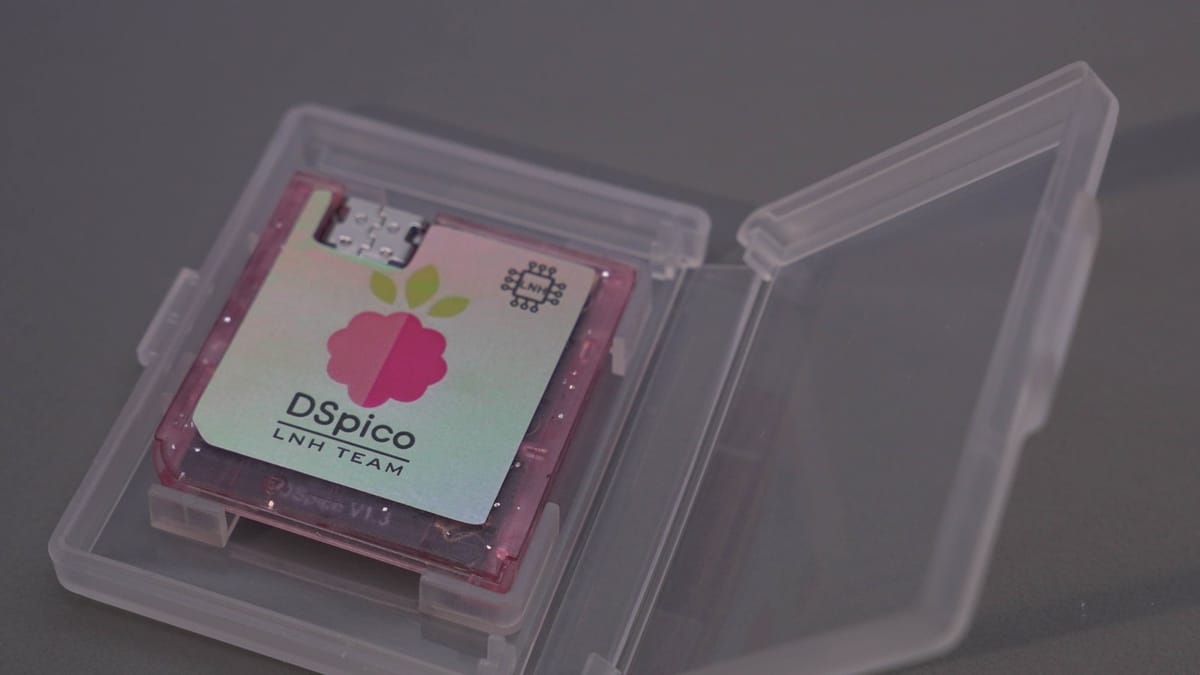
The open-source DSPico flashcart, designed by the LNH Team around a Raspberry Pi RP2040 microcontroller, is now available as a pre-assembled commercial product from Phenom Mods and LaserBear Industries, though the LNH Team has explicitly stated they have no affiliation with any commercial projects and do not endorse or engage in any for-profit endeavors concerning DSpico or related materials. After four years of development, the community-driven project has moved out of the DIY phase and into mass production.
The Nintendo DS is actually one of my favorite consoles. I love all the niche games that came out for it, and it might have the weirdest library in gaming history. You had everything from mainline Pokémon games to typing tutors that came with a physical keyboard peripheral. For years, the standard way to play those games on original hardware without carrying a binder of cartridges was an R4 card. Those older commercial flashcarts are fine, but they are closed-source, often rely on outdated kernels, and are usually restricted to standard DS mode. They also have a habit of dying unexpectedly or shipping with "time bombs" in their firmware that force you to buy a new one after a certain date.
A Raspberry Pi in a DS cartridge
The DSPico fixes a lot of the old R4 limitations. Because it uses the RP2040 chip (the same silicon powering the Raspberry Pi Pico), it reads microSD cards incredibly fast and consumes very little power. It also has a USB port right on the board for flashing firmware or transferring files directly from a PC.
The biggest technical upgrade is full DSi-mode support. If you plug a standard R4 into a Nintendo DSi or 3DS, it runs in standard DS mode. The DSPico can actually access DSi-enhanced features. This matters for games like Pokémon Black and White, which use the DSi's WPA2 Wi-Fi capabilities for online features, or games that utilize the built-in camera. It also means the cartridge can run DSiWare natively.
On the software side, the LNH Team built their own frontend called Pico Launcher. It uses a modern interface and can display your game library in a coverflow format with box art. If you prefer the classics, the cart also supports TWiLight Menu++ and the original Wood R4 kernel. The developers even included a development port on the board. This allows hardware modders to create new peripherals that interface directly with the cartridge.
Why not just mod your console?
You might be wondering why anyone needs a flashcart in 2026 when jailbreaking a DSi or 3DS is completely free. Custom firmware is great, and it is usually the first thing I recommend to new 3DS owners. But a flashcart is console-agnostic. You can load up a single microSD card with your entire library and move it between an original bulky DS, a DS Lite, a DSi, and a 3DS. You do not have to install custom firmware on every single handheld you own. It is the closest thing to a universal plug-and-play solution for the entire dual-screen family.
The LNH Team has a history of deep hardware preservation. They previously worked on the Lost-NDS-TV project, which restored lost television output capabilities that Nintendo originally designed for the console but never released to the public. They made the DSPico entirely open-source. The PCB designs, firmware, and even the 3D-printable shell files are all published online. Anyone with the right equipment can fabricate their own board.
$20 to $30 depending on the shell
Because the LNH Team does not sell the boards themselves, third-party manufacturers have stepped in to handle the logistics. Phenom Mods is selling a barebones USB-C version for around $20. LaserBear Industries offers a premium version in an injection-molded shell with holographic labels for $30. Pre-order them from Phenom mods or AliExpress.
The creators do not take a cut of these commercial sales. They just built the tools and let the community handle the manufacturing.



Comments ()