
Donkey Kong turns 45 with an almost flawless track record
Nintendo's giant ape started as a backup plan for unsold arcade boards in 1981 and evolved into one of the most consistent libraries in gaming.
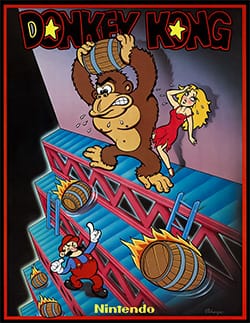
Donkey Kong hit Japanese arcades on July 9, 1981. Nintendo is celebrating the 45th anniversary of the giant ape this week. Shigeru Miyamoto's creation launched Mario into the cultural stratosphere. It also established a franchise that somehow managed to maintain its quality over four and a half decades.
The original game only exists because of a massive commercial failure. Nintendo had a surplus of unsold Radar Scope arcade boards. Company president Hiroshi Yamauchi assigned Miyamoto to convert them into something profitable. Under the mentorship of chief engineer Gunpei Yokoi, Miyamoto originally wanted to make a Popeye game. Nintendo failed to secure the license. Miyamoto simply adapted the love triangle of Popeye, Bluto, and Olive Oyl into Jumpman, Donkey Kong, and Lady (later named Pauline). They later did develop and publish a Popeye game.
The original 1981 arcade release of Donkey Kong.
Two cabinets I could never master
I used to own a Donkey Kong "Pauline edition" cabinet and a Donkey Kong Jr. Cabinet. I loved both of them. I also completely failed to master either of them. The arcade difficulty curve was brutal. I spent much more time actually clearing screens on the excellent NES and ColecoVision ports.
Outselling the Sega Saturn
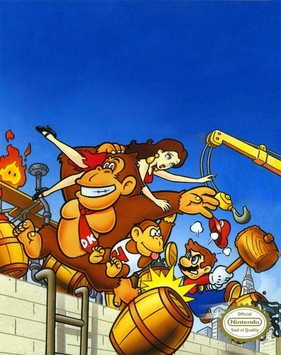
The series took a strange turn in 1994. Nintendo released Donkey Kong on the Game Boy. It looks like a straightforward port of the arcade game for exactly four levels. Then it opens up into a massive puzzle-platformer with 97 additional stages. It sold three million copies.
People often confuse its success with the Super Nintendo release of Donkey Kong Country later that same year. Donkey Kong Country was the true sales juggernaut. It moved 9.3 million units. That single Super Nintendo cartridge effectively matched the lifetime hardware sales of the Sega Saturn console. In its first holiday season alone it sold 6 million copies.
Developer Rare built that SNES revival on Silicon Graphics workstations. They pre-rendered 3D models and turned them into 2D sprites. The technique gave the game a distinct plastic look that stood out from everything else on the market. Rare followed it up with two direct sequels before moving the ape into full 3D.
The rap and the collectathon
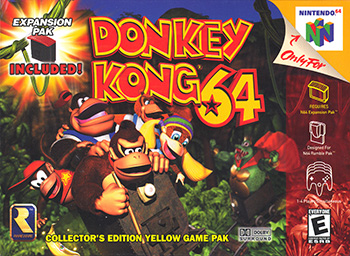
Donkey Kong 64 arrived in 1999. It has become a massive internet meme. The infamous DK Rap and the extreme collect-a-thon gameplay make it a very specific product of its time. You either love hunting down hundreds of colored bananas or you despise it. Even when mainline platformers dried up, Nintendo kept the character alive in spin-offs like Mario Kart and Super Smash Bros.
Pauline sings again on Switch 2
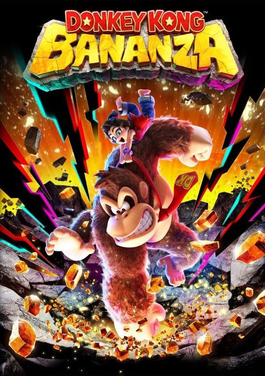
The franchise returned to form last year with Donkey Kong Bananza on the Switch 2. It ended up being one of the best games of 2025. The 3D redesign works incredibly well in motion. The developers added fully destructible environments and built brilliant rhythm mechanics around Pauline's singing.
A very short list of bad games
Look at the entire Donkey Kong library from 1981 to 2026. The list of genuinely bad entries is incredibly short. Very few gaming franchises survive 45 years without a massive drop in quality. Miyamoto's backup plan for a failed arcade shooter turned out just fine.

Comments ()