
Amiga settles with Hyperion and takes back AmigaOS 3
Amiga Corporation has signed two agreements to resolve decades of legal disputes over classic operating systems and Commodore trademarks.
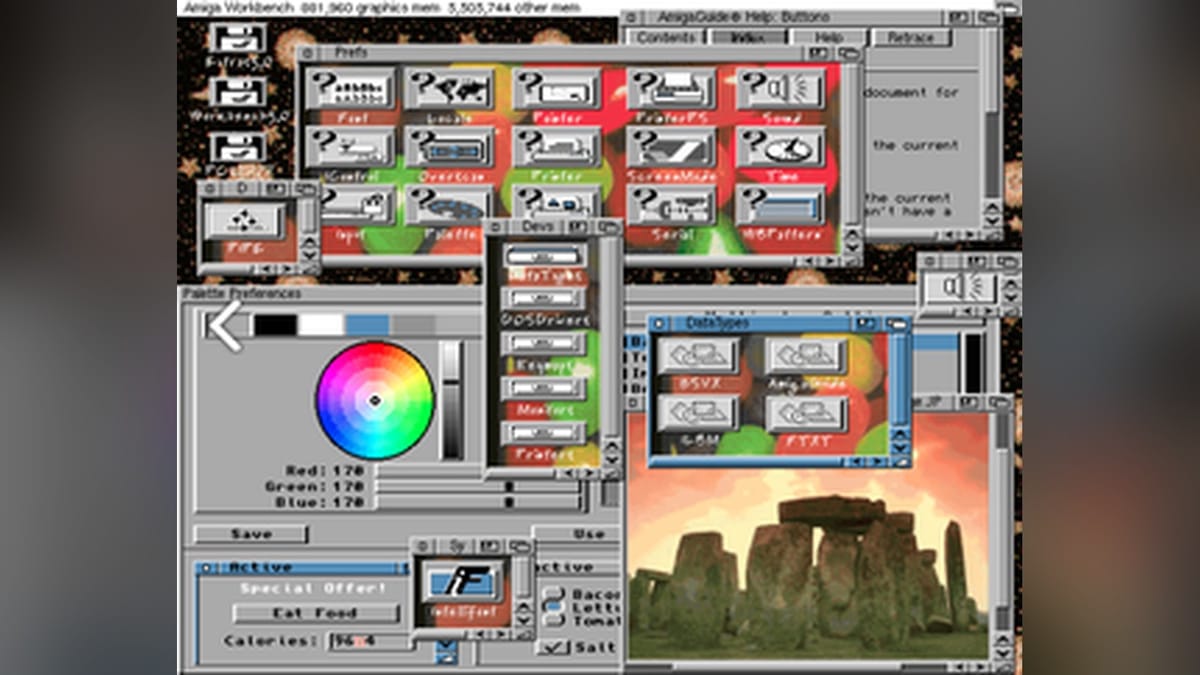
Amiga Corporation has reached an out-of-court settlement with Hyperion Entertainment and signed a new licensing agreement with Commodore International Corporation, ending decades of legal disputes over the platform's operating system and trademarks.
The Amiga platform has been bogged down by fractured intellectual property rights since Commodore filed for bankruptcy in April 1994. With the major corporate players finally clearing up the licensing and ownership mess, I wonder if this means new products could release.
According to Amiga-News.de, the settlement with Hyperion replaces a highly contested contract from 2009. Hyperion Managing Director Timothy de Groote confirmed the agreement, noting that it follows months of intensive negotiations.
A deadline for the 68k market
The most immediate change involves classic Amiga software. Hyperion has been developing modern updates for the original Motorola 68k hardware, releasing AmigaOS 3.1.4 in 2018 and AmigaOS 3.2 in 2021. Under the new agreement, Hyperion's involvement in the 68k market will officially end on December 31, 2027.
Until that date, the Belgian developer is permitted to continue distributing AmigaOS 3 versions. This includes the upcoming AmigaOS 3.3, which was first shown at the Amiga40 event in Germany last October. The update is expected to bring user interface tweaks, a central preferences tool, and new partition management software to classic hardware.
Once the 2027 deadline hits, Hyperion has to hand over the source code, revision history, and documentation for AmigaOS 3.1.4 and all subsequent updates to Amiga Corporation. The developers involved in the project will be released from their obligations to Hyperion, and Amiga Corporation will take over all future development of AmigaOS 3 internally.
The status of AmigaOS 4 remains unchanged. Hyperion was originally commissioned in 2001 to build the PowerPC-native branch of the operating system, and Amiga Corporation stated that this software was never a point of contention. Hyperion will continue to manage the OS 4 line, which received its most recent update in October 2025.
Trading trademarks
The second agreement involves Commodore International Corporation, an entity established by retro computing content creator Christian "Perifractic" Simpson to manage classic 8-bit Commodore assets.
The deal establishes a mutual exchange of rights. CIC is now licensed to use software and documentation for Commodore's 8-bit computers provided by Amiga. In exchange, Amiga Corporation gains permission to use Commodore trademarks in historical and descriptive contexts. This covers practical applications like keeping original copyright notices intact on existing software, reprinting old documentation, and using Commodore symbols on physical keyboards.
Thirty years of paperwork
The legal history of the Amiga isn't exactly easy to track. The platform debuted in July 1985 with the Amiga 1000, bringing pre-emptive multitasking and custom graphics hardware to the home computer market. The Amiga 500 followed in 1987 and became a massive success across Europe.
When Commodore collapsed in 1994, the assets were sold off and scattered. They bounced from Escom to Gateway 2000 before eventually consolidating under Amiga Corporation. Hyperion entered the picture in 1999, initially porting Windows games to the platform before taking on operating system development. The resulting legal battles over who actually owned the rights to the classic 68k operating system have stifled the platform's aftermarket for years.
Now that the rights are clearly delineated between Amiga Corporation, Hyperion, and CIC, the community might finally be able to focus on the hardware instead of the courtroom.
Comments ()