
Coinmates adds 4-player rollback netplay to MAME for 256 co-op games
Coinmates is a GPL-licensed MAME fork that adds 2-to-4-player rollback netplay to 256 tested co-op arcade games across Linux, Steam Deck, Windows, and Mac.
Developer mcerina has released Coinmates 1.4.0, an open-source MAME fork that brings two-to-four-player rollback netplay to co-op arcade games across Linux, Steam Deck, Windows, and macOS. Players connect directly using a seven-character room code routed through public BitTorrent trackers, so there are no accounts to create, no servers to run, and no router ports to forward.
MAME (originally launched by Nicola Salmoria in 1997) prioritizes hardware accuracy over lightweight execution, which makes rolling back and re-simulating frames a stubborn problem. Fightcade already solved rollback for two-player arcade fighters using GGPO and FinalBurn Neo, and RetroArch has built-in netplay, yet four-player arcade cabinets have remained awkward to set up with distant friends. Coinmates targets that exact gap, shipping as a Flatpak on Linux and Steam Deck alongside builds for Windows and macOS 11 Big Sur or newer (both Apple silicon and Intel), and reading EmuDeck's existing folder paths and controller layouts out of the box.
256 tested co-op games, from Konami brawlers to Cave shooters
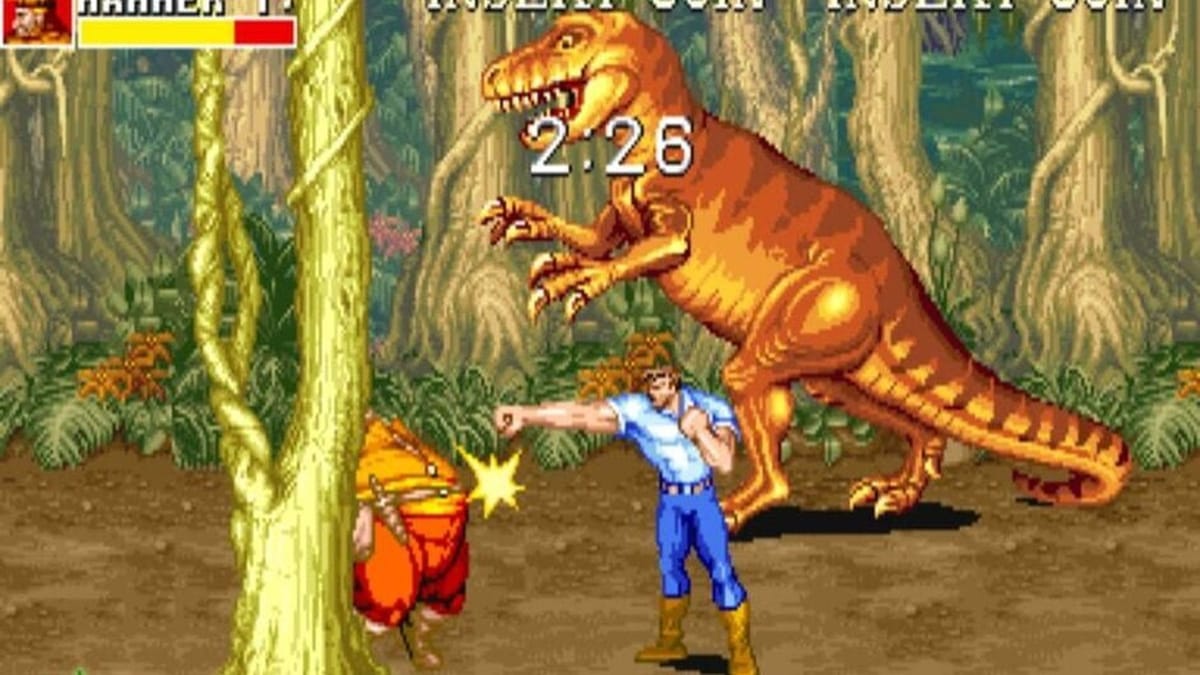
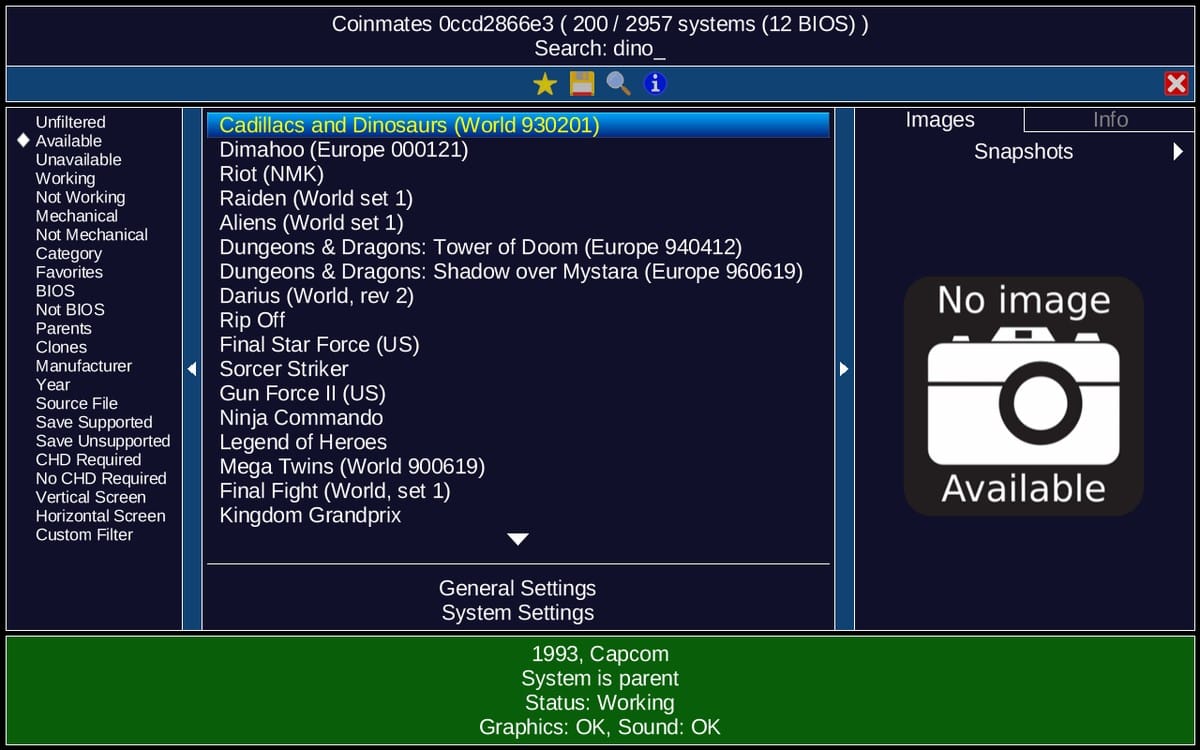
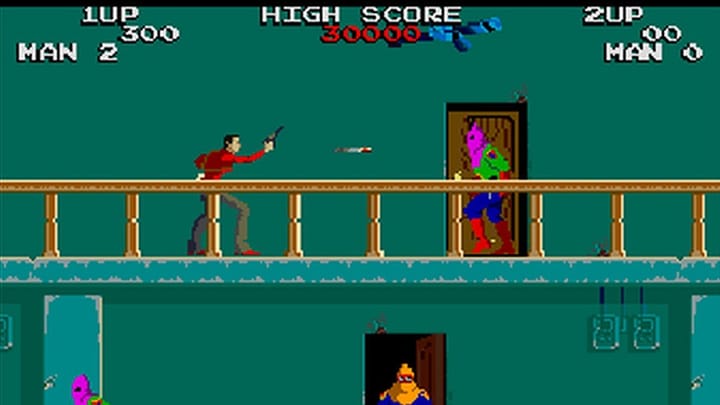
Rather than exposing MAME's entire multi-thousand-ROM library, Coinmates compiles only the drivers needed for 256 co-op beat 'em ups, shooters, and racers (all built against MAME 0.289 ROM sets). Named examples and supported arcade hardware include Konami's four-player Teenage Mutant Ninja Turtles, Capcom's CPS1 and CPS2 boards such as three-player brawler Cadillacs and Dinosaurs, SNK's Neo Geo hardware, and bullet-hell shooters on Cave, Psikyo, and Seibu SPI boards like Raiden Fighters. Single-player titles and cabinets relying on analog wheels, dials, or trackballs are restricted to solo play.
Every one of those 256 games had its MAME driver save states repaired by hand so that rewinding and replaying inputs lands on the exact same bit every time. Coinmates hashes the entire machine state (processors, sound, and video) every half second and automatically repairs any drift. In mcerina's benchmark tests against RetroArch 1.22.2 and Fightcade 2.1.45 across 252 shared games, RetroArch's FBNeo core drifted in 41 titles within 40 seconds with state checks disabled, and its default check failed constantly enough to force a hitching 3 MB state reload every 10 seconds (which still couldn't keep Teenage Mutant Ninja Turtles in sync once player two joined). Fightcade ships with its release checksum set to zero and drifted in 106 of 213 tested games, mostly in sound or video chips.
I'm impressed that host migration survived the checklist too. If someone's connection drops or their PC crashes, the game pauses for 5.6 seconds and then lets everyone else keep playing while that slot waits for them to rejoin; if the host leaves, the next player automatically takes over hosting.
MAME's accuracy still taxes heavier boards
Building on MAME instead of FinalBurn Neo comes with real performance trade-offs, and mcerina doesn't hide them. FBNeo runs 1.1 to 1.7 times faster on older CPS1 and CPS2 boards, and three to eight times faster on demanding Neo Geo, Cave, Psikyo, and Seibu SPI hardware.
Because every rolled-back frame costs a full frame of emulation, heavier games can't rewind as deeply on modest hardware. Coinmates handles connections under 100 ms with zero input delay on most boards, though Raiden Fighters still adds two to three frames over home Wi-Fi, and cross-continental links (300 ms between Italy and Australia) trade about three frames of delay for shorter visual rollbacks.
There are no spectators, rankings, replays, or RetroAchievements here, and there's a security quirk worth taking seriously: joining a room loads the host's MAME machine state directly onto your computer, and MAME wasn't hardened against malicious states. Stick to friends you trust, which is the only crowd a four-player beat 'em up session needs anyway.

Comments ()