
BioMenace Remastered is Evercade's next game of the month
Rigel Gameworks reverse-engineered the 1993 Apogee DOS shooter to add VGA graphics and modern controls. The first episode drops free for Evercade owners in April.
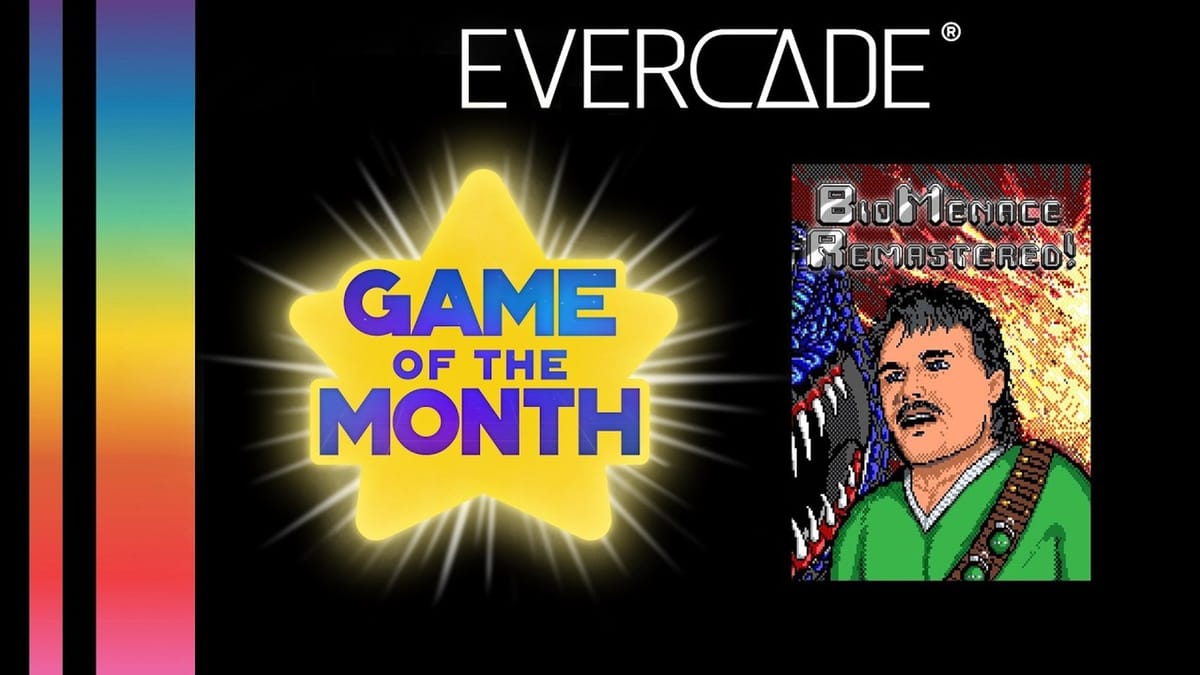
Evercade has announced BioMenace Remastered as the April 2026 Game of the Month, bringing the first episode of the 1993 DOS shooter to its retro hardware for free.
I own an Evercade EXP and a complete set of cartridges, and I even have the upcoming Nexus system on preorder. That means I am well-acquainted with the Game of the Month program. The system drops a free indie or retro title onto internet-connected Evercade consoles every month from April through December. Early the following year, Blaze Entertainment packs all those monthly games onto a physical Indie Heroes cartridge.
From reverse-engineering to official release
BioMenace Remastered is a native port built by Nikolai Wuttke-Hohendorf from Rigel Gameworks. Wuttke-Hohendorf previously developed the Evercade versions of Duke Nukem 1 and 2. He wanted to see a modernized BioMenace after Apogee released HD versions of Crystal Caves and Secret Agent. The developer of those earlier remasters moved on to other projects, so Wuttke-Hohendorf took over the effort himself.
"So, after I was done working on Duke Nukem 1 and 2 Remastered, I started reverse engineering BioMenace," Wuttke-Hohendorf said.
His initial plan was to create an open-source port of the game's engine. He pitched the project to Apogee alongside his friend Bart Remmers, who had previously handled quality assurance for Apogee's other HD remasters. The publisher passed on the project because their focus had shifted to new intellectual properties, and they lacked the internal capacity to help with the new art and level design the remaster required.
They did provide a useful piece of information. Original creator Jim Norwood still owned the rights to the game. Norwood, who currently works in the modern games industry on titles like Days Gone, gave the team his blessing to self-publish the remaster.
Fixing the sunburn
The original 1993 game ran on a modified version of the Commander Keen engine and was limited to 16-color EGA graphics. Rigel Gameworks upgraded the visuals to 256-color VGA. This fixes the original's notoriously harsh skin tones and adds entirely new parallax scrolling backgrounds.
The team also gutted several punishing 1990s PC design choices. They removed the limited lives system, added mid-level saves, and implemented quick weapon switching. Playing 1993 DOS platformers today usually involves fighting a configuration file before you even see the title screen, so a native port that just boots up and works is a relief.
The update also includes a new widescreen HUD that takes advantage of modern displays without stretching the original pixel art.
The final cartridge
The April download only includes the first episode, Dr. Mangel's Lab. This mirrors the original 1990s shareware distribution model, where players got the first chunk of a game for free and paid to receive the rest by mail.
Shareware was the standard distribution model for PC games in the early 1990s. Companies like Apogee and id Software gave away the first episode of a game on floppy disks or bulletin board systems, then charged players for the remaining episodes. In the case of BioMenace, the shareware version was exactly what sparked Wuttke-Hohendorf's interest in the first place. He played the first episode heavily as a child before eventually tracking down the full release.
The full version of BioMenace Remastered will launch on the Indie Heroes Collection 5 cartridge in early 2027. That physical release includes the original three episodes plus a brand-new fourth episode with 15 levels built specifically for the remaster.
Players who start the downloadable Game of the Month version will not be able to transfer their save states to the final physical cartridge.
Rigel Gameworks is already looking into remastering other classic shareware titles. Given how many DOS platformers are currently trapped in basic emulation wrappers with compromised performance, a native reverse-engineered engine is the best possible outcome for these older PC games.

Comments ()