
Arkanoid finally joins the Arcade Archives lineup
Taito's 1986 brick-breaking hit is coming to modern consoles on May 7.
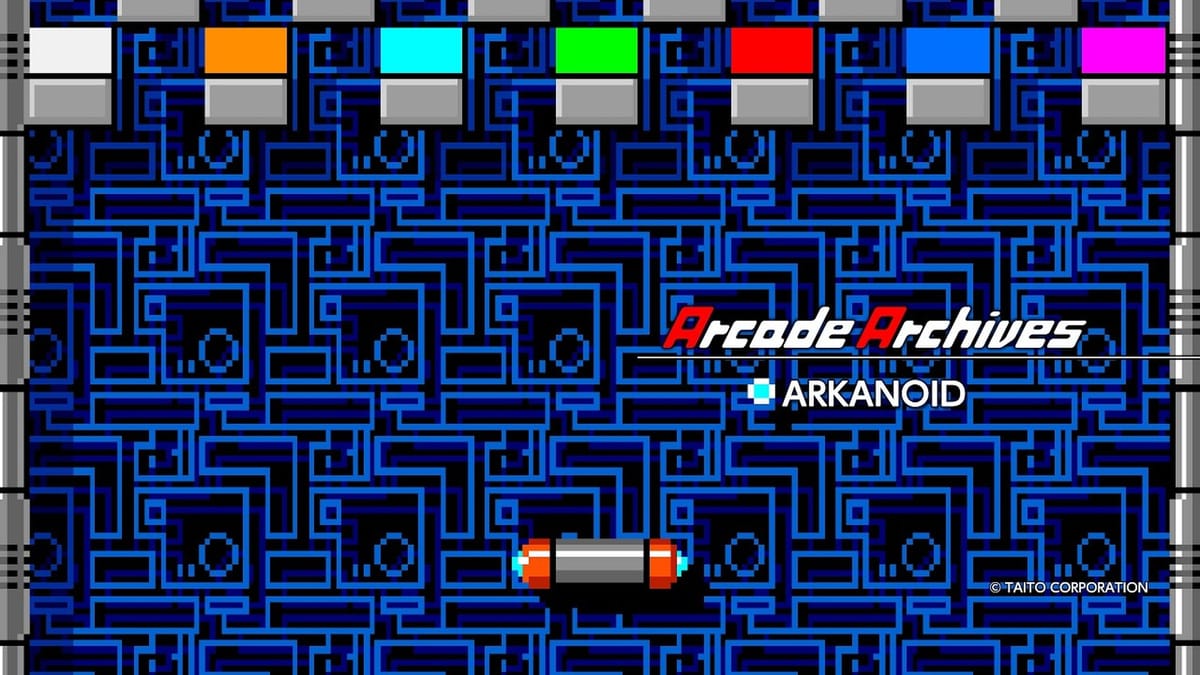
Taito's 1986 brick-breaking game Arkanoid is coming to the Arcade Archives series on May 7. Hamster Corporation will publish the digital release for Nintendo Switch and PlayStation 4.
Hamster has released over 500 classic titles through this program since 2014. The publisher has dug through the deepest catalogs of companies like Nichibutsu, UPL, and Jaleco to resurrect arcade boards most people forgot existed. They even released a Namco clone of Arkanoid called Quester earlier this year. Namco built Quester in 1987 specifically to compete with Taito's massive success. The company even put Pac-Man creator Toru Iwatani on the development team. It took twelve years and half a thousand releases for Hamster to finally get to the actual game that started the craze.
Adding lasers to Breakout
Arkanoid took the basic paddle-and-ball concept of Atari's Breakout and added a science fiction wrapper. You control the Vaus spaceship. You bounce an energy bolt against a mysterious wall. The goal is to escape a warped labyrinth and return to your mothership.
The game introduced enemies to the genre. Geometric shapes and abstract alien designs float down the screen toward your ship. If the ball hits one of these enemies, it deflects at unpredictable angles. This forces you to constantly adjust your positioning rather than relying on pure geometry to clear the screen.
Taito also added power-ups. Colored capsules fall from destroyed blocks. You can catch them to expand your paddle, slow down the ball, or equip twin lasers to shoot directly at the wall. Another capsule lets the paddle catch the ball and hold it before firing again. There is also a warp capsule that opens a door to the next level immediately. These additions became the standard template for almost every block-breaking game that followed.
The arcade game even includes a final boss. After clearing 32 stages of blocks, players face off against DOH. This giant floating head resembles a moai statue and shoots projectiles at your ship. You have to deflect the ball into the boss repeatedly to win the game.
The spinner problem
The original arcade cabinets used a weighted spinner knob for precise paddle movement. This allowed players to make rapid sweeping movements across the screen or tiny adjustments with a flick of the wrist.
Modern console ports map that movement to an analog stick or directional pad. Hamster's releases usually include sensitivity options to help compensate for the lack of original hardware. Home console players have dealt with this issue before. When Taito brought the game to the Nintendo Entertainment System in 1987, they actually manufactured a custom Vaus controller with a built-in spinner just to make the port playable.
Hamster has a long working relationship with Taito. The two companies collaborated on the Taito Milestones collections, which bundle various Arcade Archives releases into physical packages. Hamster also chose Taito's original Space Invaders as its milestone 500th release last Christmas.
This standalone release includes the standard Arcade Archives additions. Players get online leaderboards, a high score mode, and a five-minute caravan mode. The high score mode challenges you to get the best score possible with standard settings and no save states. Caravan mode gives you exactly five minutes to rack up points. These modes are completely isolated from the standard game. This prevents anyone from using cheats or suspension points to climb the online leaderboards.
The game will cost $7.99 on digital storefronts when it launches tomorrow. You can check the official Arcade Archives site for the exact release timing in your region.
Arkanoid is one of those games that spawned a thousand clones. Playing the original arcade ROM is a good reminder of exactly why everyone spent the next thirty years trying to copy it.


Comments ()