
Arcade Archives adds Tatsumi's triple-screen 1983 racer TX-1
Hamster is bringing the multi-monitor Formula 1 arcade classic to modern platforms, including the Switch 2 and PS5, on July 30.
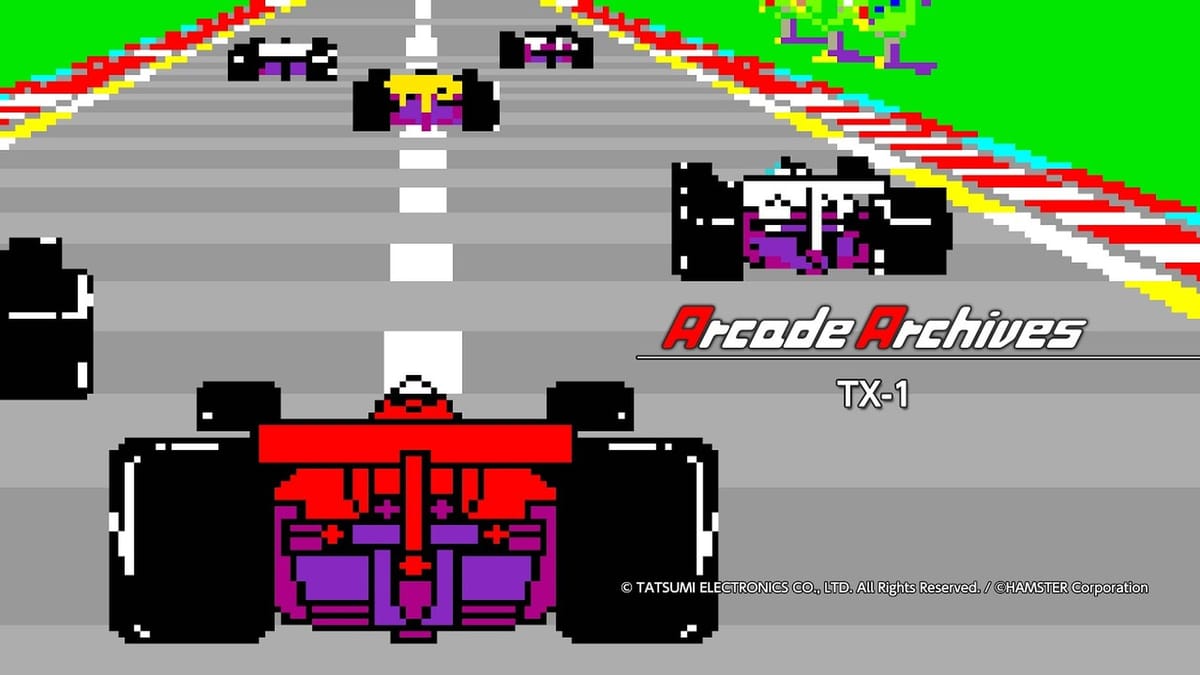
Hamster Corporation is releasing Tatsumi's 1983 arcade racing game TX-1 under the long-running Arcade Archives label on July 30. The port brings the classic multi-monitor Formula 1 racer to PlayStation 4 and Nintendo Switch, alongside current-generation hardware via the newly established Arcade Archives 2 for PlayStation 5, Xbox Series X/S, and the upcoming Switch 2.
Tatsumi Electronics Co., Ltd. wasn't as prolific as Sega or Namco in the 1980s, but their engineering ambitions were wild. Building a three-screen racing game in 1983 was an expensive gamble for arcade operators.
TX-1 was an early pioneer in the racing genre. It used three CRT monitors placed side-by-side to create a massive panoramic view of the track. You drive a Formula 1 car through branching paths that take you across various global environments. It worked. Tatsumi would later iterate on this exact hardware setup for 1985's Buggy Boy, but TX-1 is where the company first experimented with ultra-wide arcade cabinets.
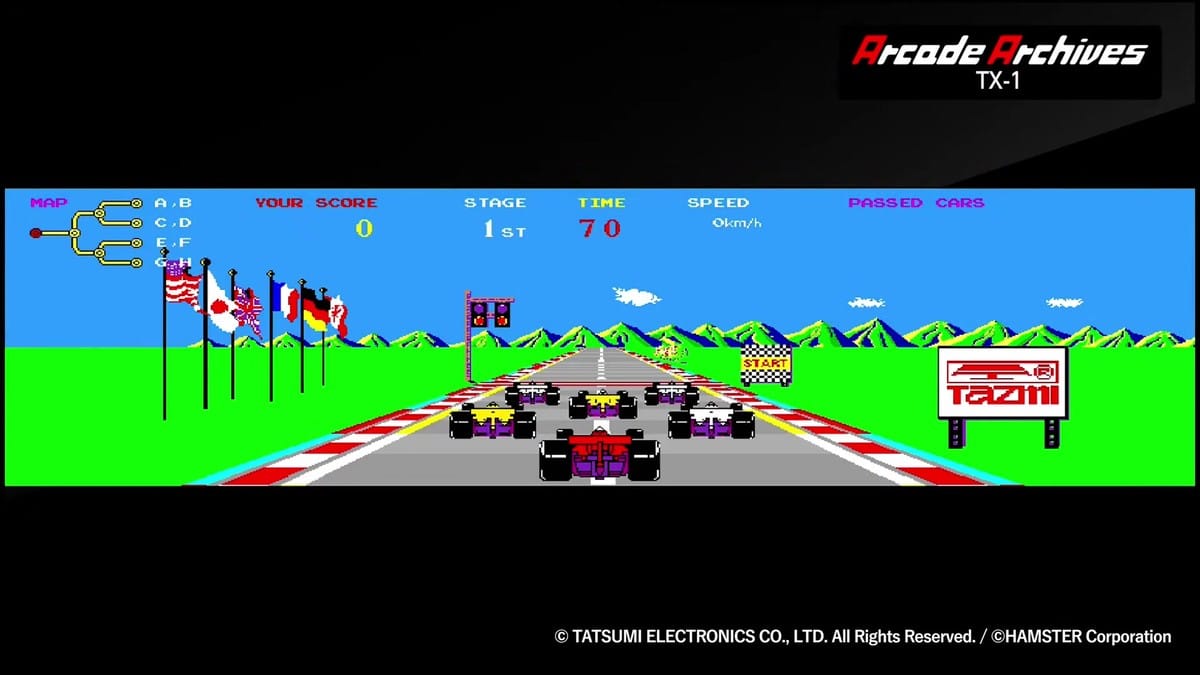
Three screens of speed
The gameplay trailer shows off exactly how this ultra-wide aspect ratio translates to a single modern 16:9 display. Hamster squeezes the entire horizontal field of view into the middle of the screen. It's a bit letterboxed, but it preserves the peripheral vision that made the original arcade cabinet stand out. You can actually see rival cars creeping up on your flanks long before they enter your main line of sight.
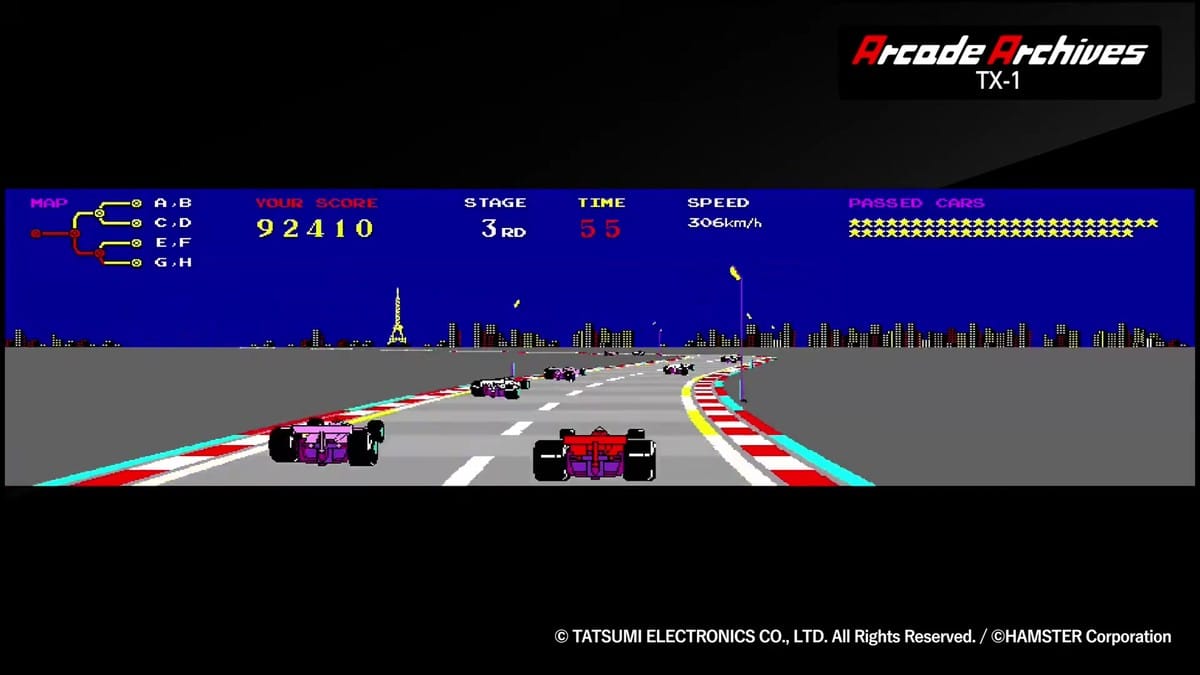
You start on a standard race grid before hitting checkpoints that extend your time limit. The track splits at various points, functioning a lot like Sega's OutRun, though Tatsumi beat Sega to the punch by a full three years. One route might take you through a desert, while another sends you past a pixel-art Eiffel Tower.
The graphics rely entirely on sprite scaling. Every car, tree, and road sign is a 2D image rapidly increasing in size to simulate 3D depth. The hardware pushes an impressive number of sprites at once, especially during the crowded starting grid sequences. The audio is mostly engine noise and tire squeals, standard for the era, but the sheer speed of the scrolling still holds up.
The multi-monitor problem
Hamster has been tackling these complex arcade setups more frequently lately. Just like we saw when Namco's Final Lap hit the service, getting a multi-screen game to feel right on a standard television requires some compromise. You don't get the physical bezel separation of the original hardware.
To compensate, the Arcade Archives release includes the usual suite of emulation options. You can tweak the game difficulty, adjust the display settings to mimic a vintage CRT monitor, and compete on global leaderboards. The high score caravan mode is also back, giving you five minutes to put up the best time possible.
Still, having an accessible way to play Tatsumi's hardware at home beats tracking down a working 43-year-old triple-CRT cabinet. Those machines are massive, heavy, and notoriously difficult to keep running. The game launches tomorrow. I want to see how the steering feels on a standard analog stick, since the original cabinet relied on a heavy force-feedback wheel.


Comments ()