
A new free horror adventure just launched for the Apple II
Developer Michael Schaffer has released The Forgotten Room, a free 6502 assembly horror game built for classic Apple II hardware.
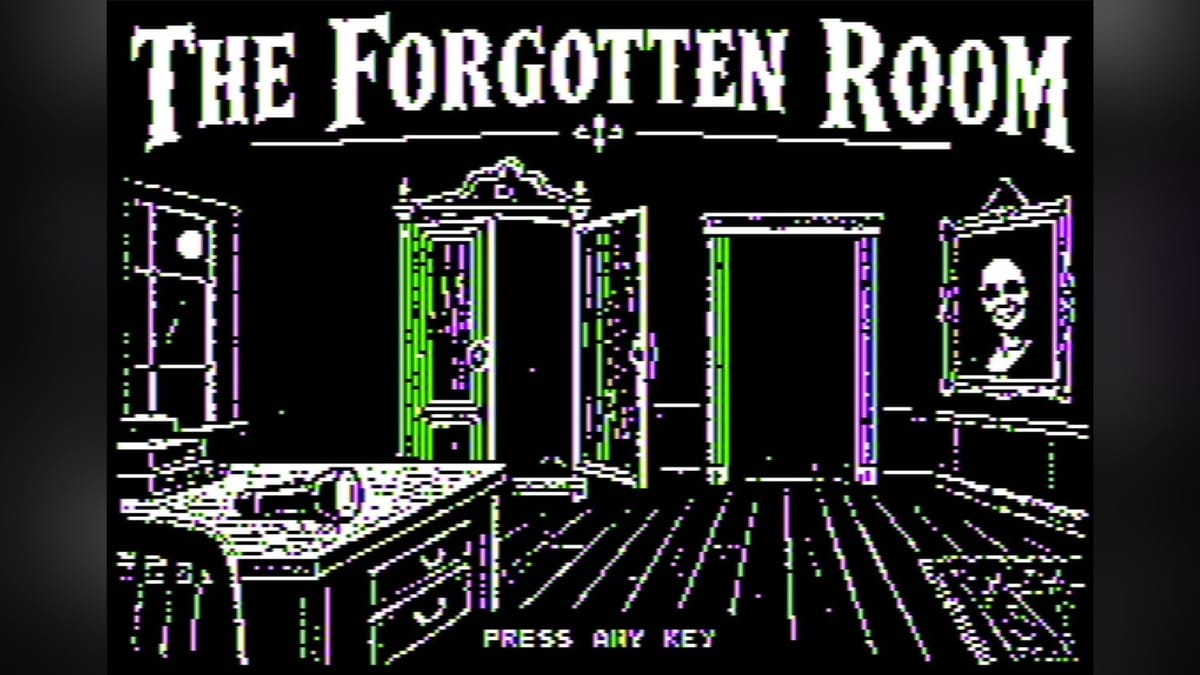
Developer Michael Schaffer has released The Forgotten Room, a new free horror adventure game for the Apple II. The game is available as a bootable ProDOS HDV image and runs on any Apple II, II Plus, or IIe system with at least 64K of RAM. It is also compatible with the Apple IIc and IIGS.
The release was announced via Call-A.P.P.L.E., where Schaffer detailed his goal of recreating the feel of early graphic adventures. The Apple II is the exact hardware that birthed the graphical adventure genre in 1980 with Roberta and Ken Williams' Mystery House. That title combined two-word text parsing with vector-drawn monochrome graphics, establishing a template that dominated PC gaming for a decade. Schaffer's new title uses that same foundational blueprint of static high-resolution graphics paired with text, but applies it to a modern horror narrative.
Color fringing is a feature
The Forgotten Room relies entirely on original Apple II HGR graphics and custom character-generated text. Schaffer recommends playing on a color composite or monochrome monitor rather than an RGB display. The game intentionally uses the Apple II's composite artifact color fringing to build its atmosphere.
For those unfamiliar with early Apple hardware, the system generated colors by exploiting the quirks of NTSC television signals. Depending on where a pixel was placed on the screen, it would bleed into adjacent pixels to create colors that the hardware could not technically output on its own. Schaffer uses this bleeding effect to his advantage. It is a clever way to turn a hardware limitation into an aesthetic choice.
The plot follows Jacob, a man closing up a furniture store for the night. A flickering hallway light leads him past an old armoire into a shifting maze of rooms that should not exist. Players have to navigate these environments, solve object-based puzzles, and uncover the history of a character named the Porter and his trapped family. The game includes multiple creatures and two different endings based on a final player decision.
Built in 6502 assembly
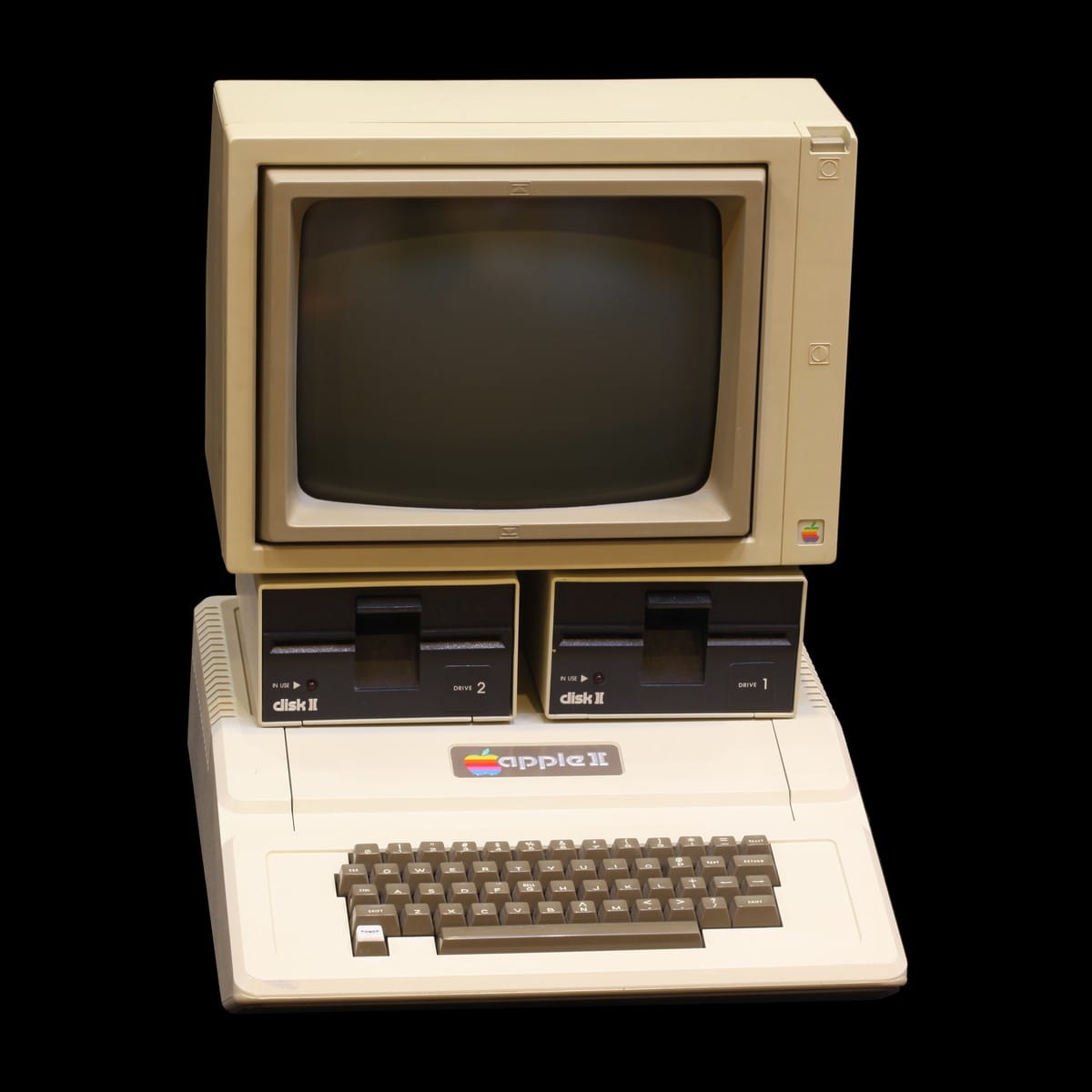
Schaffer developed the game under the label Hidden Sector Software. He wrote it entirely in native 6502 assembly language using the Merlin assembler. This is not a modern engine exporting to a retro format. It is a genuine piece of 8-bit software built with period-accurate tools.
Writing a full adventure game in assembly requires managing every byte of the Apple II's 64K memory limit. The Merlin assembler was a staple for developers in the 1980s, and seeing it used for a new release in 2026 shows a commitment to historical accuracy.
This release is the first installment in a planned series. The developer noted that players will need to finish this chapter for the upcoming sequel to make sense. I am curious how the two endings branch out, considering the strict memory constraints of the environment. Packing multiple narrative paths into a single 64K footprint usually requires some creative memory management.

Comments ()