
The 3dfx Voodoo 1 just got an open-source FPGA core
Hardware developer Francisco Ayala Le Brun has released SpinalVoodoo, an open-source project that recreates the classic 3dfx Voodoo 1 graphics card.

Hardware developer Francisco Ayala Le Brun has released SpinalVoodoo, an open-source FPGA core that recreates the original 3dfx Voodoo 1 graphics card.
Back in the day, I owned a Voodoo 1 and a Voodoo Banshee. I loved them. They were the absolute peak of PC gaming hardware in the late 1990s. They took games from chunky software rendering to smooth hardware-accelerated 3D. Now, this project brings that exact silicon logic back to life on modern programmable chips.
The pass-through era
To understand what SpinalVoodoo is doing, you have to look at how the original hardware worked. When 3dfx Interactive launched the Voodoo Graphics card in 1995, it was not a standalone video card. It was a dedicated 3D accelerator. You had to connect it to your existing 2D video card using a thick VGA pass-through cable. Your standard 2D card handled Windows and DOS prompts. When you launched a supported 3D game, you would hear a distinct mechanical click from the Voodoo card as it took over the monitor signal.
That hardware transition completely changed the PC gaming market. Games that previously ran at 15 frames per second suddenly ran at a buttery smooth 30 or 60 frames per second with texture filtering. The company dominated the 3D accelerator space until Nvidia acquired them in December 2000.
Software emulators like PCem and 86Box have been able to emulate the Voodoo 1 for years. SpinalVoodoo takes a different approach. By using a Field-Programmable Gate Array, Le Brun is recreating the actual physical logic gates of the original chip. This allows for cycle-accurate behavior that software emulation often struggles to maintain without massive CPU overhead.
Running on the DE10-Nano
The core currently runs on the Terasic DE10-Nano board. This is the exact same hardware that powers the MiSTer FPGA project. Le Brun, who works as the CTO at VideowindoW, built the core using SpinalHDL. This is a modern hardware description language based on Scala. It offers a different development workflow compared to older languages like Verilog or VHDL.
The core can already render early 3D PC titles. Le Brun has shared functioning traces of Quake and the 1996 MS-DOS rally racer Screamer 2. Both of these games were early showcases for the Voodoo hardware. Quake in particular helped popularize 3dfx when id Software released the GLQuake executable. That patch allowed the game to use the Voodoo card's hardware acceleration through the OpenGL API, resulting in transparent water and smoothed textures that blew software-rendered Quake out of the water.
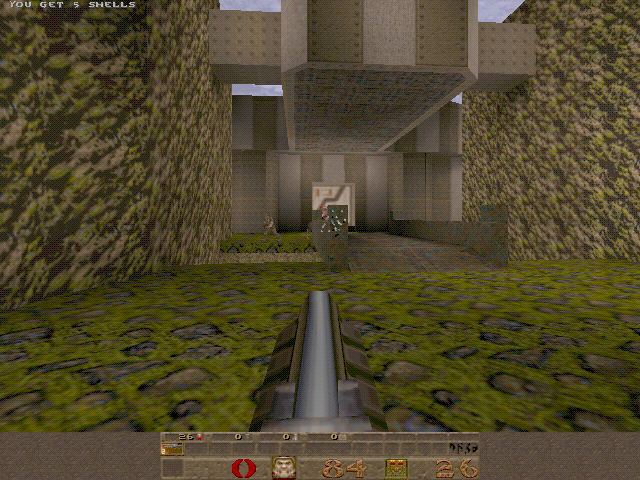
Screamer 2 is another perfect test case. Originally released by Milestone in September 1996, the rally racer relied heavily on 3dfx's proprietary Glide API. Glide was a massive part of the Voodoo's success. It was a low-level API written specifically for 3dfx hardware, allowing developers to extract maximum performance without the overhead of early DirectX versions. Seeing Glide games run natively on an FPGA core is a major technical achievement for retro PC hardware recreation.
No hardware sales planned
The project is still in active development. Le Brun is still implementing some specific features of the original 1995 chip architecture. The GitHub repository for the project was just created in late December 2025.
It is strictly an open-source development project aimed at accurate hardware replication.
Recreating the chip at the gate level ensures we can study exactly how that early 3D acceleration worked. It also means we might eventually see cycle-accurate 3dfx support integrated into broader retro computing FPGA setups. Until then, the code is out there for anyone with a DE10-Nano and a desire to see the 3dfx logo spin once again.
Pick up Quake II on Humble Bundle.
Some links in this article are affiliate links. Purchases made through them help support Pants Pants Revolution at no extra cost to you.



Comments ()