
Xbox celebrates 25 years and confirms a fifth console is on the way
Ahead of the original Xbox's November 15 birthday, CEO Asha Sharma gifted engraved consoles to 111 staffers and confirmed a fifth hardware generation.
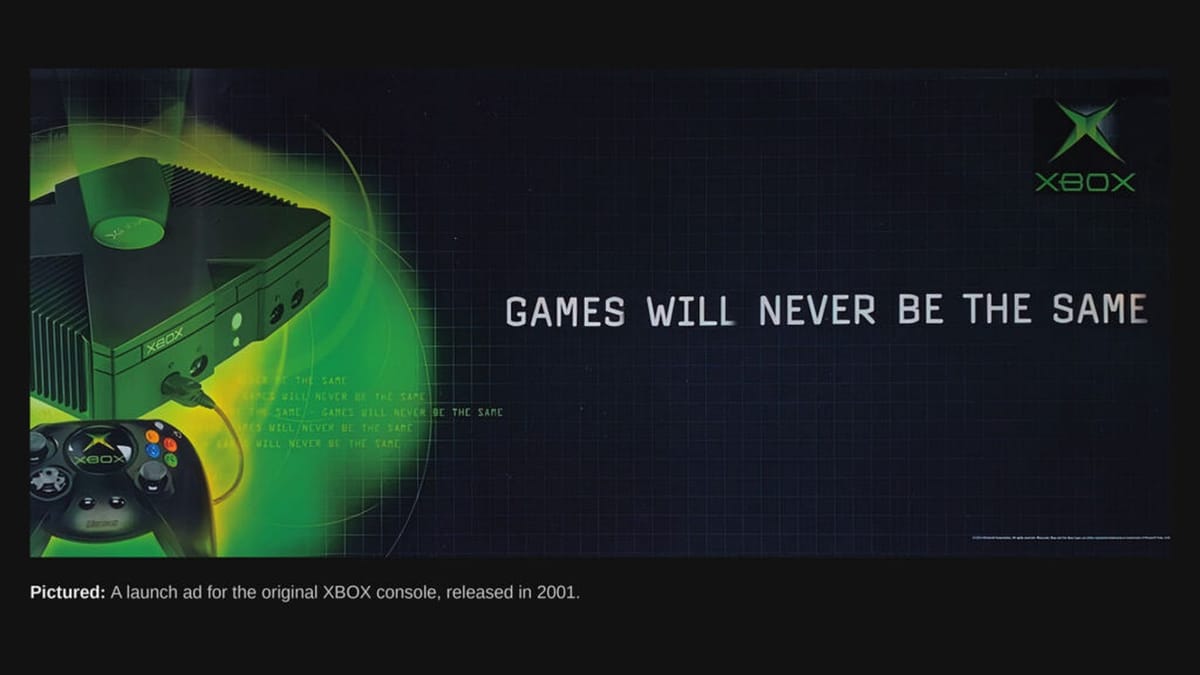
One hundred and eleven employees across Microsoft Gaming are getting custom engraved consoles today to mark at least a quarter-century with the brand. Xbox CEO Asha Sharma announced the gift in a 25th-anniversary memo to Team Xbox, bringing the company's ongoing celebration home to Seattle ahead of the original machine's November 15 birthday and confirming that a fifth console generation is on the way.
Microsoft has spent much of late 2026 rolling out limited hardware and community features for the milestone. Sharma's letter looks further back than 2001, though, pulling together nearly five decades of PC software history while pitching a leaner future for how big games get built.
From 160 kilobytes to Project Midway
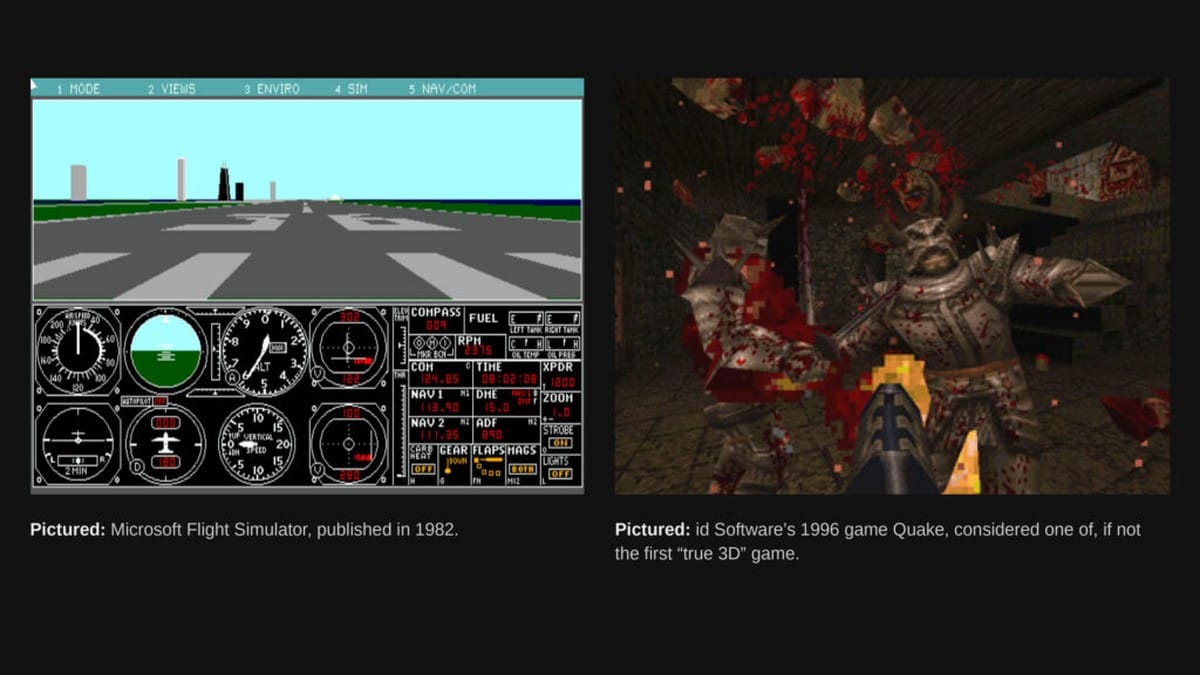
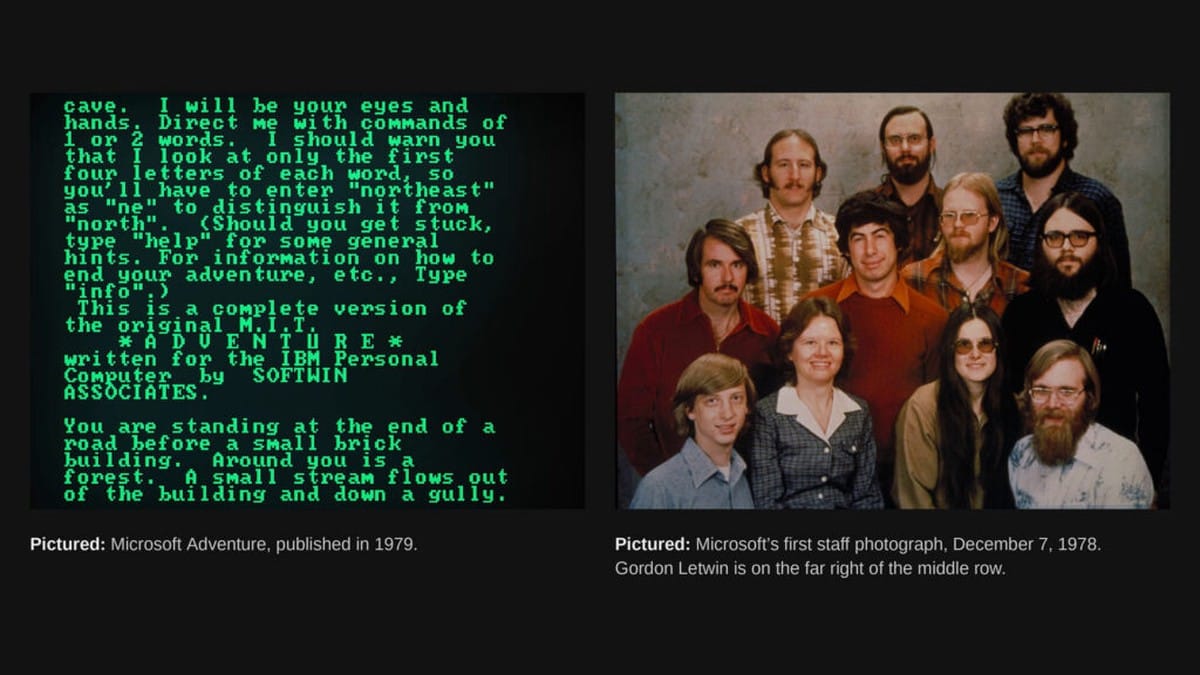
Before there was a giant plastic X, there was Gordon Letwin. One of Microsoft's first 13 employees (and later an architect on OS/2), Letwin adapted Will Crowther and Don Woods's Colossal Cave Adventure into 1979's Microsoft Adventure, a text parser that looked a lot like MS-DOS because there wasn't much else for a screen to look like yet. Three years later, Bruce Artwick brought subLOGIC's aviation code to the 16-bit IBM PC as Microsoft Flight Simulator, squeezing 20 airports and 16-color 2D graphics onto a 160 KB floppy disk.
Microsoft spent the next decade publishing Minesweeper, Age of Empires, and four more flight simulators, while building DirectX in the mid-1990s so studios like id Software didn't have to fight Windows just to render 3D polygons. It's a funny quirk of corporate consolidation that id Software helped test those early Windows gaming pipes in the '90s, only to end up owned by Xbox 24 years later alongside Bethesda and Activision Blizzard.
A small group from that DirectX team eventually pitched "Project Midway," an effort to build the first American home console in decades out of standard x86 PC components. When the $299 box arrived in North America on November 15, 2001, subtlety wasn't on the spec sheet.
Nine in ten homes still had dial-up
The original Xbox was two to three times the size of Sony's PlayStation 2 and Nintendo's GameCube, topped with an alien-green jewel that looked ready to crush a TV stand. Under that hood sat more than double the processing power of its rivals, an 8 GB internal hard drive that spared players from buying plastic memory cards, and a built-in broadband Ethernet port.
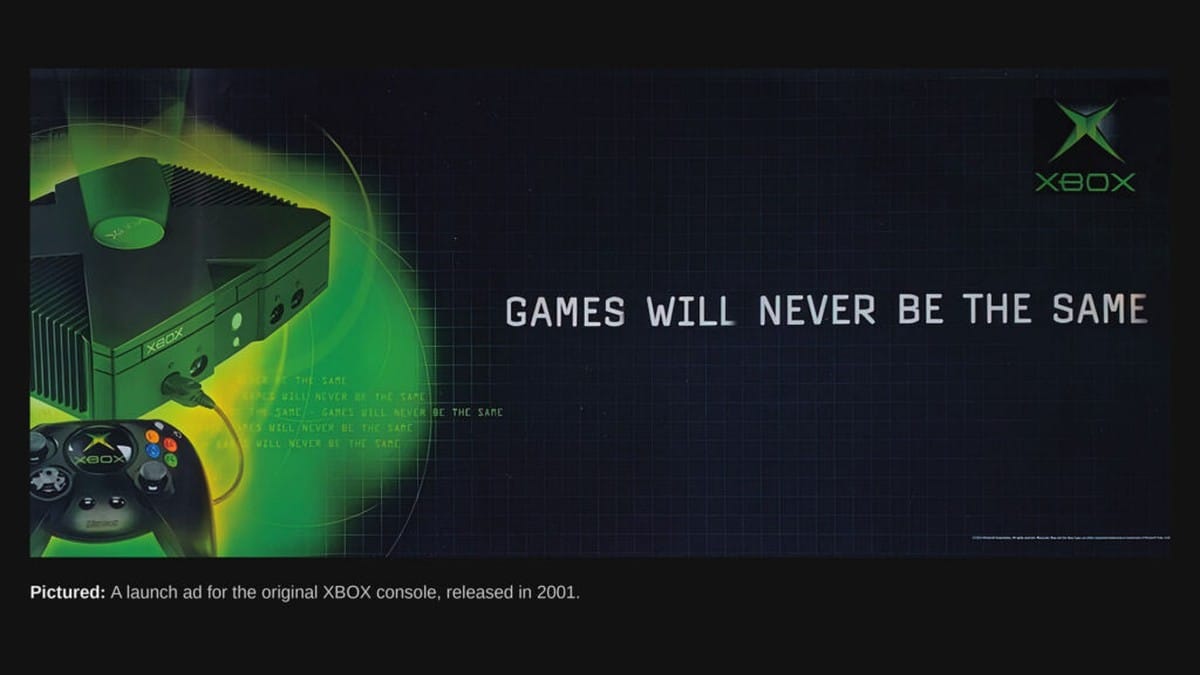
Shipping a console without a dial-up modem in 2001 took nerve, considering nine out of ten households still logged online over phone lines. That bet paid off in November 2002 when Xbox Live launched with unified friend lists and matchmaking. Paired with Bungie's launch shooter Halo: Combat Evolved, which proved dual-analog sticks could actually handle first-person aiming on a couch, Microsoft's oversized PC-in-a-box survived long enough to spawn the Xbox 360 in 2005, the Xbox One in 2013, and the Xbox Series X|S in 2020.
2.5 petabytes and the AI pitch
Sharma's memo lands at an unusual moment for Microsoft's gaming division. Having stepped in to replace Phil Spencer after his retirement in February 2026, Sharma arrived from Microsoft's CoreAI leadership team, and you can hear that background clearly in how she frames the next 25 years.
She contrasts Artwick's 160 KB flight sim from 1982 with Microsoft Flight Simulator 2024, a cloud-streamed project drawing on 2.5 petabytes of data (more than 15 billion times larger than the original) to render 200 million square miles of Earth, real-time weather, and trillions of individual trees. That jump in scale came with multi-hundred-million-dollar budgets that keep smaller, riskier ideas from ever getting greenlit.
"A small team will be able to build worlds that today demand hundreds of developers and hundreds of millions of dollars."
Because AI tooling in game production remains a touchy subject across the industry, Sharma doesn't actually use the letters "AI" in her note. Instead, she argues that the link between headcount, capital, and creative scale is starting to break, predicting a return to an era where solo programmers or tiny teams can change how people play. It is questionable whether automated tools will magically solve bloated AAA development budgets without creating messy creative tradeoffs of their own, though nobody would complain if games stopped needing 500-person credits sequences just to ship.
Hardware collectors at least get a concrete promise amid the big-picture philosophy. Even with Microsoft pushing Game Pass and cloud streaming across over a billion players every year, Sharma says Xbox's job still includes delivering "unmistakable hardware," with that fifth-generation machine already in the works. Hopefully it fits on a standard media shelf better than the 2001 model did.
Comments ()