
Unseen64 unearths beta assets for LucasArts' terrain-bending shooter Fracture
The preservation site has released early screenshots of Day 1 Studios' 2008 cult classic, revealing how the terrain-deformation mechanics looked during development.
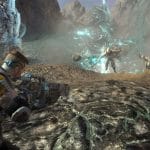
Preservation archive Unseen64 has released a collection of previously unseen beta images for Fracture, the 2008 third-person shooter developed by Day 1 Studios and published by LucasArts. The gallery, available now on the Unseen64 website, showcases early user interface elements and environmental assets from the game's development cycle on PlayStation 3 and Xbox 360.
The release provides a rare glimpse into the production of a title that has largely faded from the collective memory, despite its significant technical ambitions. According to the post on Unseen64, the images are being archived to address the "lack of documented info" surrounding the game's history.
Reshaping the battlefield
For those who missed the Xbox 360 generation, Fracture was a third-person shooter built around a singular, impressive gimmick: terrain deformation. While most games of the era treated the ground as a static mesh, Fracture allowed players to dynamically raise and lower the earth using a tool called the Entrencher.
The concept was novel. If you were pinned down by enemy fire, you didn't just crouch behind a waist-high wall. You created one. If an enemy was hiding in a trench, you could raise the ground beneath them to force them into the open. The newly released beta images highlight the evolution of these environments, showing early iterations of the rocky, futuristic landscapes that players would eventually tear apart.

A legacy of physics
Day 1 Studios was not a novice team when they tackled this project. The studio had previously cemented its reputation with MechAssault, a launch title for Xbox Live that helped define online console gaming. With Fracture, they attempted to push physics simulation to the forefront of the gameplay loop.
The technology behind the game was impressive for 2008. It used a proprietary engine capable of altering geometry in real-time, a feat that was computationally expensive for the PlayStation 3's Cell processor and the Xbox 360's tri-core architecture. The beta images released by Unseen64 offer a look at how the visual language of this tech evolved. You can see variations in the HUD (Heads-Up Display) that suggest the team iterated on how to communicate terrain depth and weapon status to the player.
Lost in the brown filter era
Despite the innovative tech, Fracture arrived during a crowded window for shooters. It launched in October 2008, putting it in direct competition with heavyweights like Gears of War 2, Resistance 2, and Dead Space. The game also suffered from the visual trends of the time. It leaned heavily into the desaturated, brown-and-grey color palette that defined the mid-2000s "gritty realism" aesthetic.
The beta screenshots reinforce this aesthetic direction, showing the stark, industrial environments that characterized the game's art style. While the gameplay mechanics were unique, the visual presentation often struggled to stand out against the visual fidelity of Epic's Unreal Engine 3 juggernauts.
Preserving the middle tier
The work done by Unseen64 is vital for games like Fracture. While blockbuster hits usually have extensive "making of" documentaries and art books, mid-tier titles often disappear without a trace once their servers go offline or their discs leave retail shelves. LucasArts, the game's publisher, was acquired by Disney in 2012 and subsequently shut down as a developer in 2013, leaving many of its non-Star Wars IPs in a state of limbo.
These beta images serve as a digital footprint for a game that tried to do something different with the cover-shooter formula. It is a reminder that even in the most homogenized eras of gaming history, developers were experimenting with mechanics that broke the rules of static geometry.
Comments ()