
Ubisoft just crammed 40 years of gaming history into a 40-second video
A new animated short celebrates the publisher's 40th anniversary, tracking the evolution from Rayman and Splinter Cell to the modern open-world era.
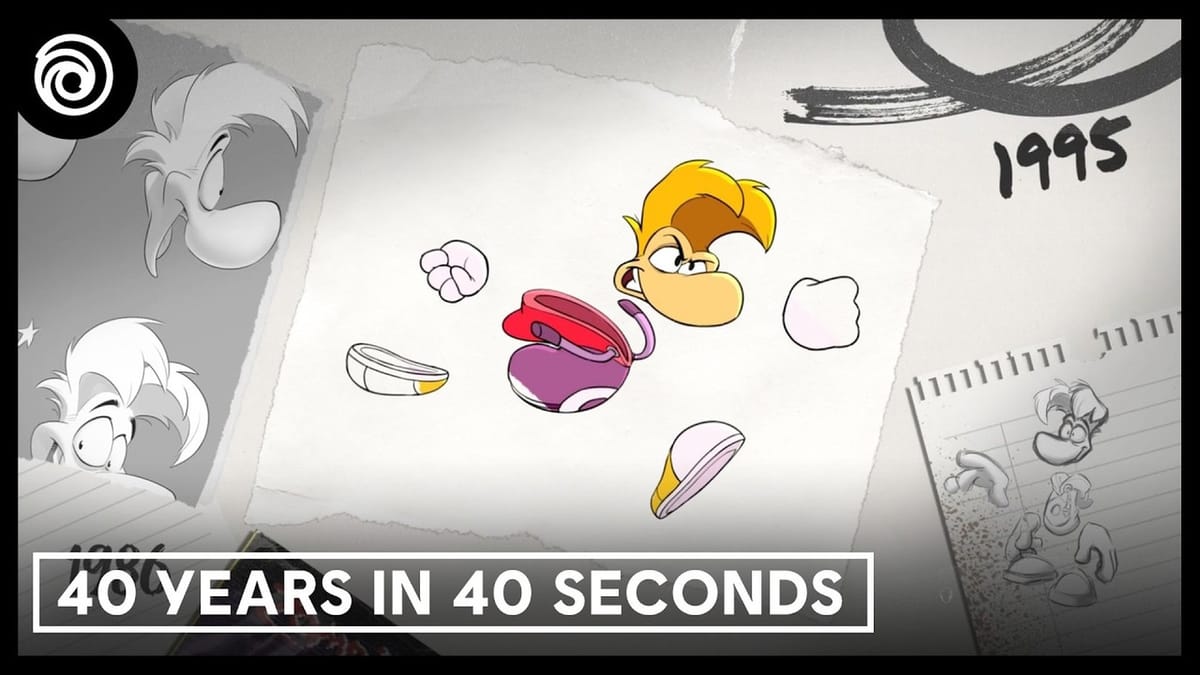
Ubisoft has released a rapid-fire animated video celebrating the company's 40th anniversary. The short clip crams four decades of publisher history into a single montage, running from the company's founding in 1986 all the way through its modern catalog.
Ubisoft's 40th anniversary animation. (Source: Ubisoft)
The animation highlights specific milestone years for the French publisher. It starts with a nod to 1986, the year the Guillemot brothers founded the company originally known as Ubi Soft. From there, it jumps to 1995 to introduce Rayman, moving rapidly through the 2002 debut of Splinter Cell, the 2006 arrival of the Rabbids, and the 2007 launch of Assassin's Creed.
Watching the timeline fly by made me think about my own favorite eras of the publisher. My best Ubisoft memories definitely lean toward Rayman. The 1995 original was a staple of my early gaming years. The limbless hero gave the company its first true mascot, and the later UbiArt Framework games like Rayman Origins and Rayman Legends remain some of the tightest 2D platformers ever made. The UbiArt engine allowed developers to import concept art directly into the game, resulting in visuals that still look pristine today.
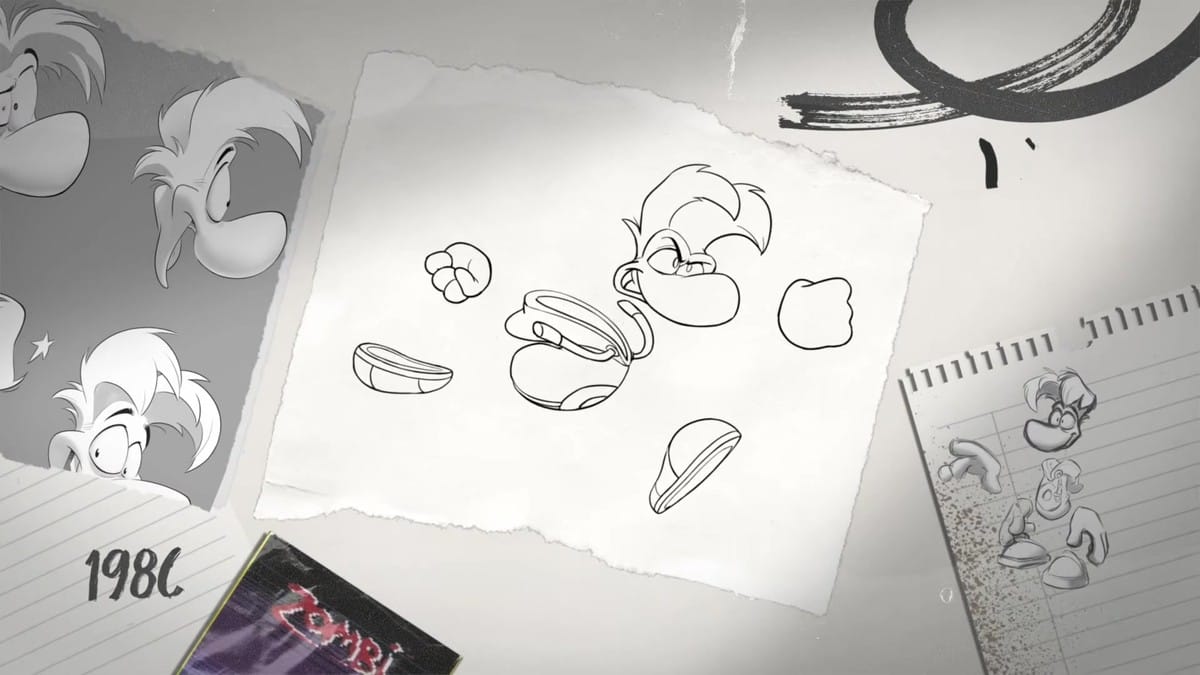
The video is also a visual reminder of how drastically the company's output has shifted over time. The late 1990s and early 2000s were defined by platformers and experimental PC titles. Then came the Tom Clancy acquisition, which pivoted the publisher toward tactical stealth and military shooters.
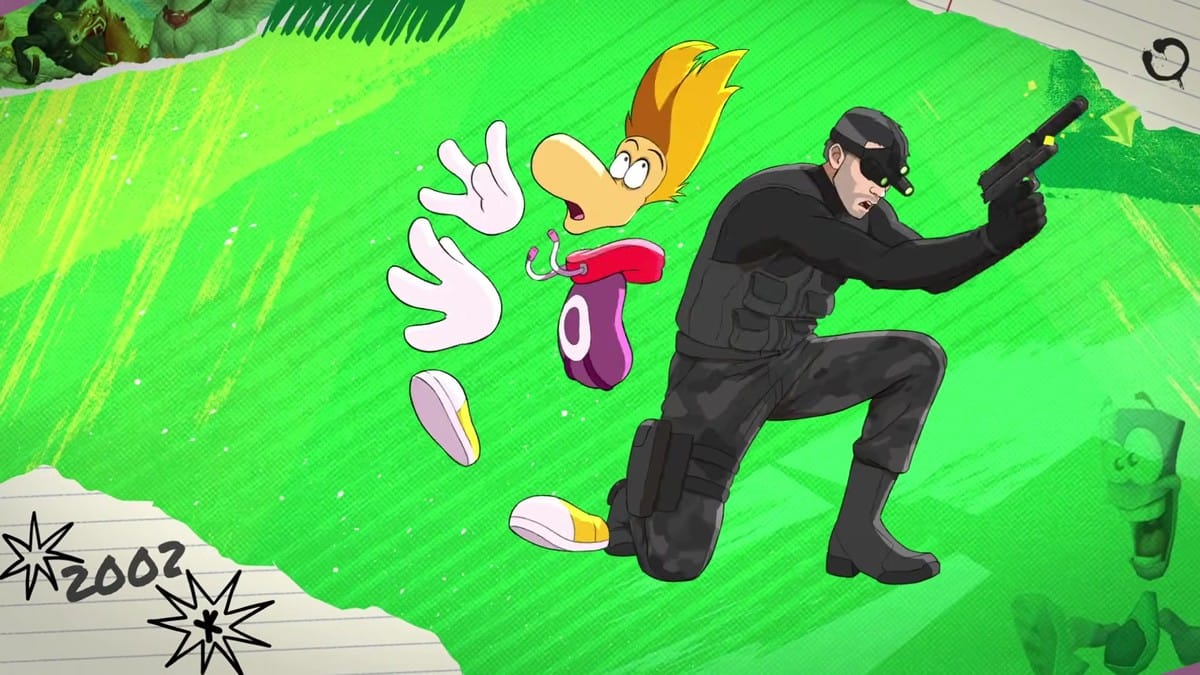
Blink and you miss Sam Fisher
The inclusion of Sam Fisher in the 2002 slot is a nice nod to Splinter Cell, though it might sting a bit for fans who have been waiting over a decade for a new mainline entry. The stealth franchise fundamentally changed Ubisoft's trajectory in the PlayStation 2 and Xbox generation, proving they could compete directly with Metal Gear Solid.
By 2007, Assassin's Creed established the open-world formula that would eventually consume almost the entire Ubisoft portfolio. The timeline acknowledges this shift, highlighting the 2012 release of Far Cry 3. That game codified the modern Ubisoft open-world structure: climbing towers to reveal the map, clearing outposts, and hunting wildlife for crafting upgrades. The montage highlights Vaas Montenegro, the antagonist who became the blueprint for every charismatic villain the publisher has designed since. It is a formula the company still relies heavily on today, as shown by the final jump to 2021 for Far Cry 6.
Ezio and the Just Dance panda
There is something inherently funny about seeing Ezio Auditore placed right next to a person in a giant panda suit. The 2009 rhythm game gets its own callout in the timeline, which makes sense given it is one of the highest-selling franchises in the company's history. Just Dance became a massive casual hit on the Nintendo Wii, and Ubisoft kept releasing new versions for that console all the way until 2020.
Ubisoft has survived four decades in an industry that routinely destroys massive studios. They evolved from a small family-run distributor in France to a global network of thousands of developers. The 40-second format does not leave much room for deep reflection, but it is a neat visual summary of how we got from a limbless platforming hero to an endless sea of map markers.
Comments ()