
The celPix ROM graphics editor hits version 1.0
YoriKv's cross-platform tool for viewing and editing retro game graphics is officially out of pre-release.
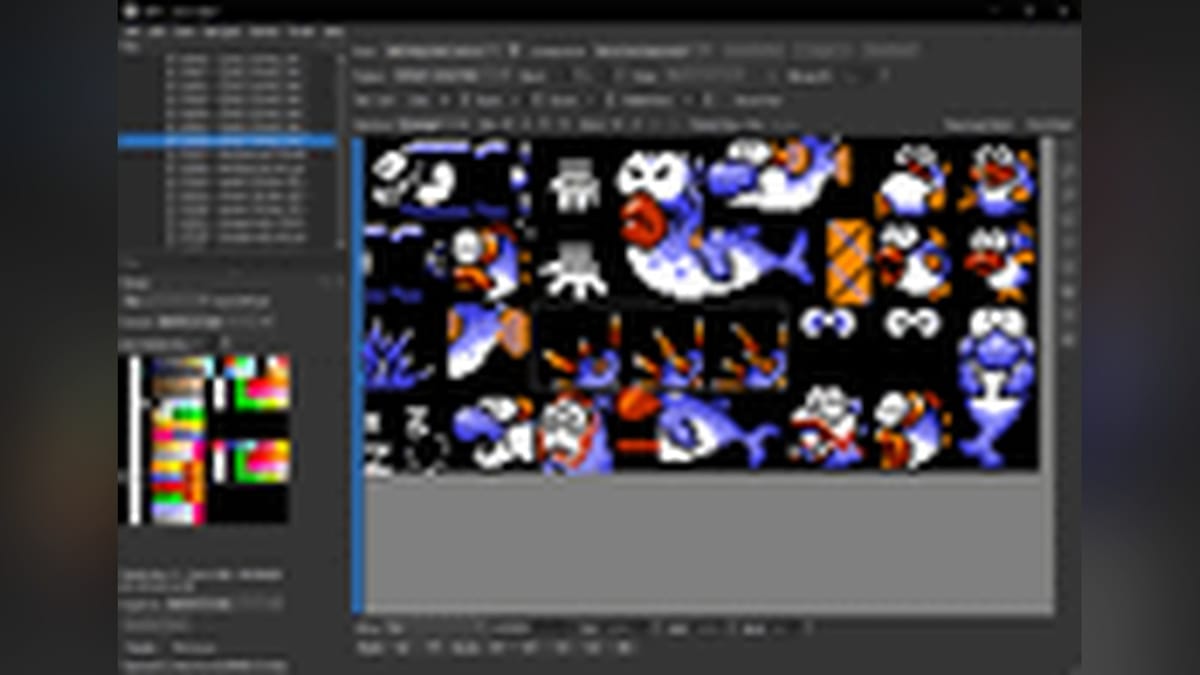
Developer YoriKv has released version 1.0 of celPix, a cross-platform graphics and tilemap editor designed for ROM hacking and reverse engineering. The stable release is available now on GitHub.
The tool was originally announced in an early state in July 2026. Over the last two months, YoriKv expanded the format support and fixed bugs based on community feedback. The 1.0 build was tested across 12 different games spanning the Super Nintendo, arcade hardware, and the NEC PC-8800 series.
Moving past legacy tools
For years, anyone trying to modify raw graphics in a cartridge dump relied on aging utilities like YY-CHR or Tile Molester. Those tools were foundational. They also frequently struggle with complex compression methods or multi-chip arcade ROM structures. CelPix is built to replace them. It handles pixel editing, tilemap editing, and spritemap formats natively.
When working with a Super Nintendo ROM, graphics are rarely stored as standard image files. They are compressed and interleaved in ways that break standard image editors. Older tools often required users to manually extract, decompress, edit, and re-inject the graphics using a chain of different command-line utilities. CelPix bypasses this by supporting export and import directly to external editors, alongside its own internal pixel tools.
The software includes built-in support for viewing byte streams as palettes, which helps locate hidden palette data in undocumented games. It also manages file types, byte reshaping, and compression algorithms like SNES LZ1 and Konami PackBits. The ROM slicing and bookmarking features solve a common headache. Instead of writing down hex addresses in a text file to remember where a specific character sprite is located, users can organize sections directly within the ROM and save the layout to their project file.
Python plugins for obscure hardware
The most practical addition in version 1.0 is the plugin architecture. Users can write custom Python scripts for any part of the pipeline, from pixel rendering to compression and reshaping. This means if a specific Japanese microcomputer or bootleg arcade board uses a proprietary graphics format, a hacker can write a local plugin for that specific project without waiting for an official software update.
The NEC PC-8800 support fills a specific gap. The PC-88 family was a massive platform for Japanese PC gaming in the 1980s, hosting early RPGs and visual novels. Graphics on those systems often use planar formats that break standard tile viewers. Having a modern tool that can reshape bytes and apply custom codecs makes translating or modifying those early PC games much easier.
I want to see how the project file system handles massive multi-file arcade dumps in practice.

Comments ()