
The $30 Raspberry Pi Smart Display Module is out now
The Intel SDM adapter board lets you slot a Compute Module 5 directly into commercial displays, and it is finally available to purchase.
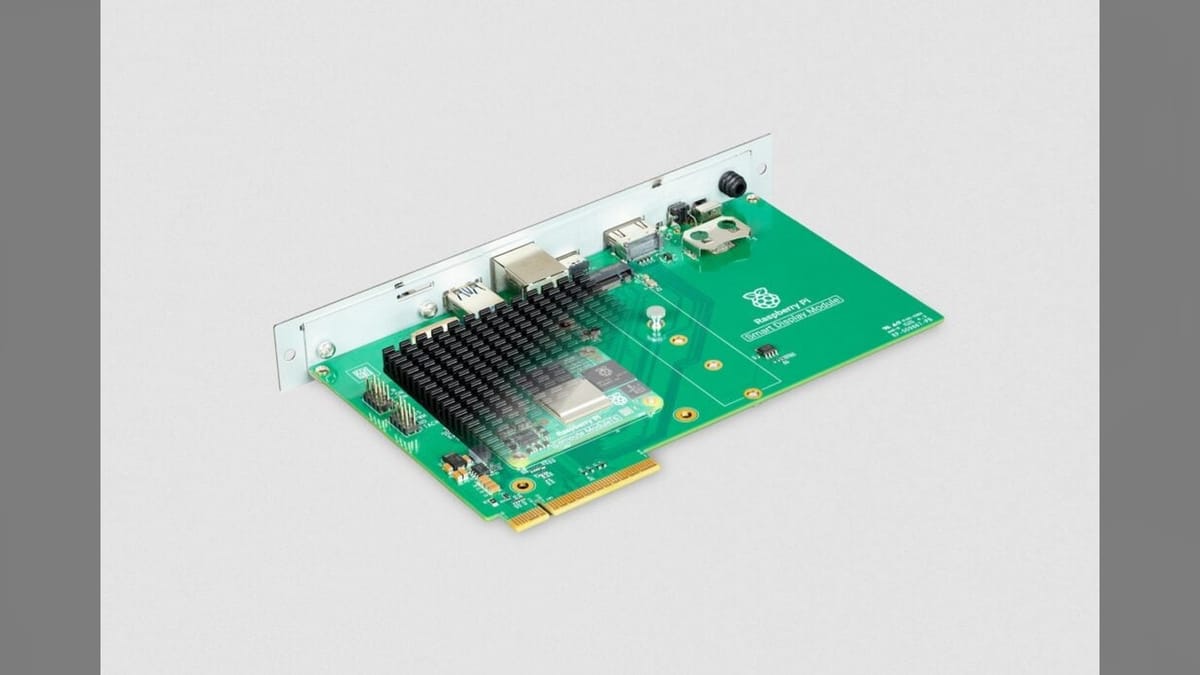
Raspberry Pi released the Smart Display Module today for $30. The adapter board lets you plug a Compute Module 5 directly into commercial monitors. According to Raspberry Pi, it's now available through the company's approved resellers. The board was developed alongside Sharp Display Solutions Europe to fit the Intel Smart Display Module specification. That means it'll slide right into the chassis of compatible screens, turning a dumb monitor into a fully integrated computer.
No cables required
The Intel SDM standard exists to clean up digital signage. A quick glance behind the menu board at most fast food restaurants usually reveals a tangled mess of zip ties holding a dusty PC in place, and this hardware exists to solve that exact problem. This board eliminates the clutter entirely. It routes power, video, audio, and data through an internal connection, and the whole setup is fanless. It runs silently, which makes it ideal for continuous operation in retail stores, hospital waiting rooms, or airport terminals. You just slide the cartridge into the slot and turn the monitor on.
Bring your own compute
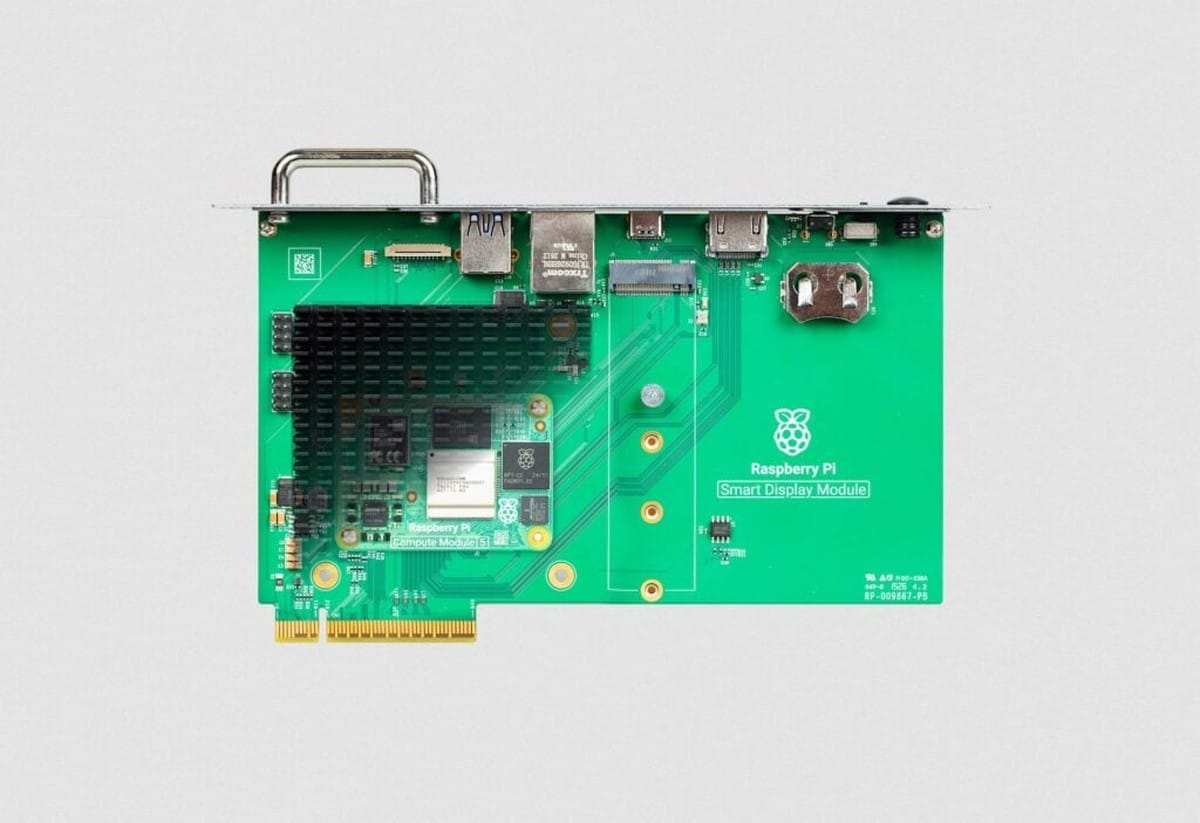
The $30 asking price only covers the adapter board itself. You'll still need to supply the actual computer. The Raspberry Pi Compute Module 5 starts at $45 for the base model, not $30. That brings the minimum hardware cost to $75 before you factor in storage or the display itself. Because the board uses the CM5, it runs standard Raspberry Pi OS builds and Linux kernels right out of the box. Any content management system that already works on a standard Raspberry Pi 5 will work perfectly here, and it doesn't require weird workarounds.
The carrier board also includes an M.2 expansion slot. You can use it for high-speed NVMe storage, or you can drop in an AI accelerator like the Hailo-8 modules that Raspberry Pi recently started pushing for edge computing. It's flexible.
The Intel SDM standard
Intel introduced the Smart Display Module specification to replace their older Open Pluggable Specification. The goal was to create a thinner, power-efficient standard for integrated displays. Sharp Display Solutions Europe, which formed after Sharp and NEC merged their display divisions, has been a major proponent of the format. They build professional monitors that accept these modules directly into the chassis.
It makes hardware upgrades simple. When the computer inside the kiosk gets too slow to render modern web assets, you just slide the old module out and push a new one in. You won't have to replace the entire expensive commercial screen just because the processor aged out. The display can stay mounted to the wall during the entire upgrade process.
Commercial focus
Raspberry Pi has been leaning heavily into the industrial and commercial markets since their IPO on the London Stock Exchange earlier this year. As previously reported, the company first showed this module off at the Integrated Systems Europe trade show in Barcelona. Media Looper, a digital signage company, tested the hardware for three months and praised the lack of external cables.
I'm curious how many small businesses will actually adopt this over a standard Pi 5 taped to the back of a TV. The Intel SDM standard is great, but compatible monitors cost a lot more than standard consumer televisions. For a large airport updating its flight information displays, the clean installation is easily worth the premium. For a local coffee shop, the zip ties will probably stay.


Comments ()