
Monkey Island just got a gorgeous Commodore 64 concept project
Commodore 64 artist Joachim Ljunggren has released a series of mockups showing what Lucasfilm's classic adventure game would look like on the 8-bit micro.
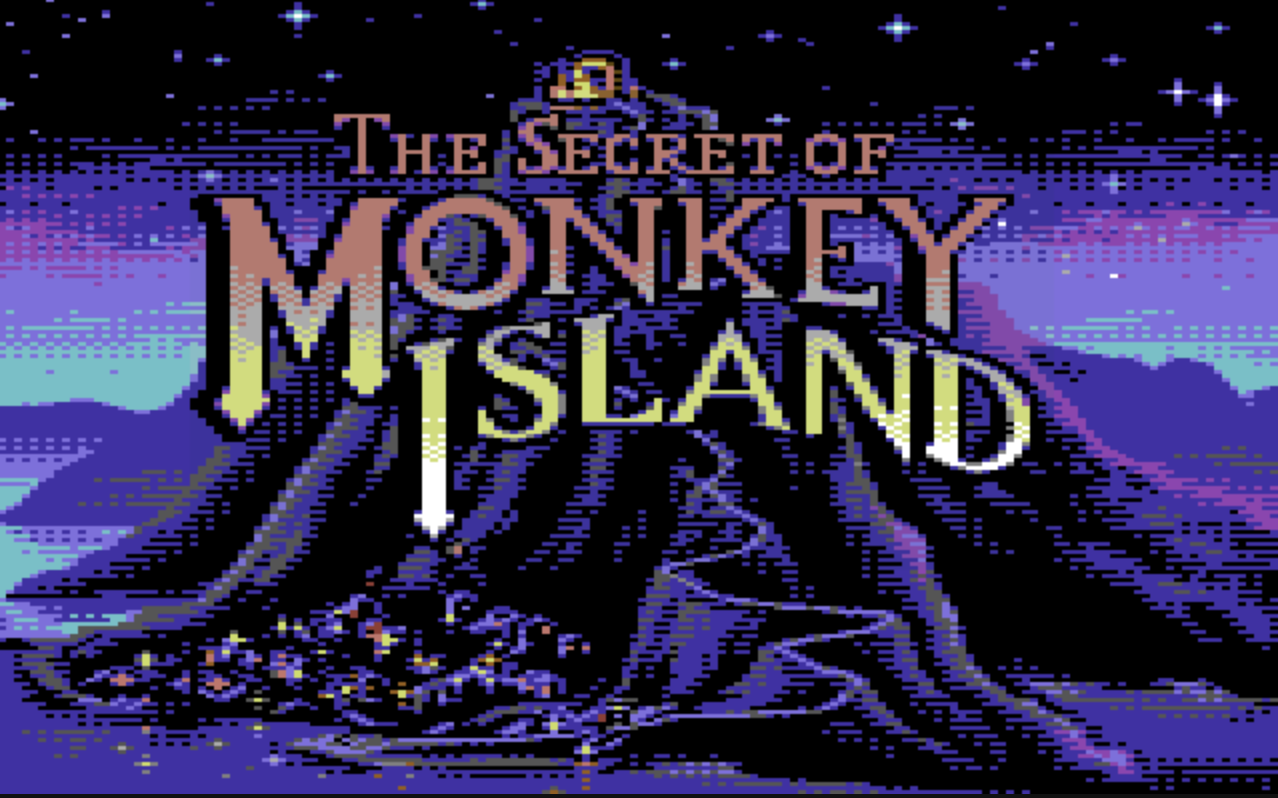
Commodore 64 artist Joachim Ljunggren has published a new concept art project that reimagines The Secret of Monkey Island for the 8-bit computer. The gallery on his Pixeldust portfolio site shows how the 1990 Lucasfilm Games adventure might have looked if it had been scaled down for Commodore hardware. The game coding is by Andreas Larsson.
I grew up playing a lot more Sierra Online games than LucasArts titles. I spent my childhood typing commands into Space Quest and King's Quest rather than pointing and clicking my way through the Caribbean. But I love the Monkey Island series anyway. The artwork is incredible, and Ljunggren's demake project captures that original style perfectly.
Just a visual mockup
To be clear right away, The Monkey Island Project is an actively developed, playable port of The Secret of Monkey Island for the Commodore 64. The first chapter is already fully playable, including background graphics, objects, dialogue, inventory system, and insult sword fighting, running original SCUMM scripts transpiled to native 6502-code. Ljunggren took the original SCUMM engine layouts and translated them into the C64's restricted color palette and resolution.
Fan-created concept art like this is a fun thought experiment for hardware that missed out on certain massive releases. The Secret of Monkey Island made it to the Amiga, Atari ST, Macintosh, and Sega CD. The 8-bit computer generation was largely left behind as the industry moved to 16-bit machines and larger floppy disk formats. A game of this size would have required constant disk swapping on a C64.
The artist behind Rubicon

Ljunggren knows his way around this specific hardware. He is a veteran pixel artist who worked on classic C64 titles like the 1991 action game Rubicon. Translating Ron Gilbert's pirate adventure to the C64 requires a deep understanding of the system's limitations.
The original DOS release used 16-color EGA graphics before getting a 256-color VGA upgrade. The C64 also has 16 colors, but its palette is fixed and heavily muted compared to IBM compatibles. The system lacks the bright, vibrant shades needed for a tropical setting. Ljunggren managed to preserve the moody, dark blue night skies and the glowing yellow lights from the Scumm Bar despite these restrictions. The interface at the bottom of the screen retains the classic nine-verb layout and inventory system.
320 by 200 pixels
The original game ran at a resolution of 320 by 200 pixels. The C64 can output that exact resolution in its high-resolution mode, but it restricts color placement to two colors per 8-by-8 pixel block. Most C64 games use the system's multicolor mode instead. That mode halves the horizontal resolution to 160 pixels to allow four colors per block.
Ljunggren's art appears to carefully navigate these hardware constraints to create screens that look like they could run on a real machine. The chunky pixels give Guybrush Threepwood a slightly softer look, but his signature white shirt and brown pants are instantly recognizable.
64 kilobytes of RAM
Lucasfilm Games built the SCUMM engine specifically to make porting games easier across different platforms. The engine debuted with Maniac Mansion in 1987, which actually did receive an official Commodore 64 release. By the time The Secret of Monkey Island launched three years later, the developers had moved on to more powerful hardware. The game's complex dialogue trees, insult sword fighting mechanics, and detailed animations simply outgrew the 64 kilobytes of RAM available on the Commodore machine.
It is a great look at an alternate history where Guybrush made his debut on a 5.25-inch floppy disk while SID chip music plays in the background.
Comments ()