
Ruffle 0.7.0 improves text rendering and AS3 support for Flash games
The open-source Flash emulator just dropped a major update with better font scaling and ActionScript 3 optimizations.
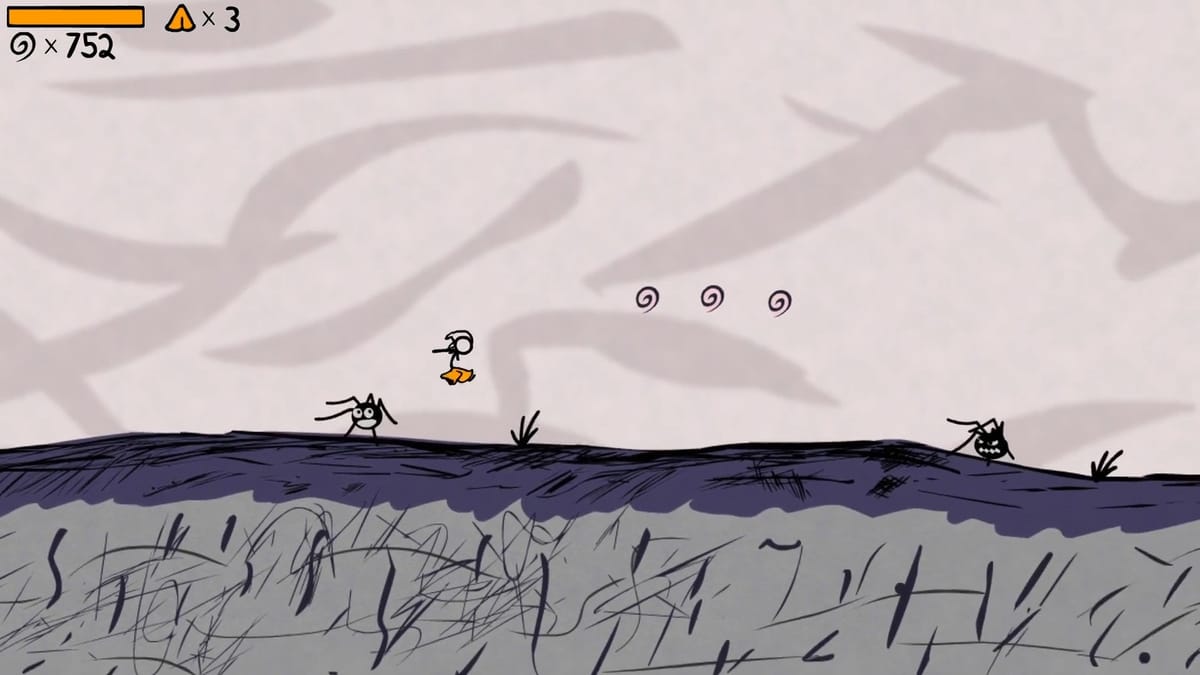
The open-source Flash Player emulator Ruffle has released version 0.7.0, introducing a complete refactor of its text rendering and major ActionScript 3 performance upgrades. The development team pushed the update on October 7, continuing their ongoing work to keep two decades of browser history playable without relying on dead software.
The version 0.7.0 release is available now across all supported platforms. That includes native desktop builds for PC, Mac, and Linux, an Android application, and the WebAssembly version that runs directly inside modern browsers. It's completely free and open source.
Before Steam became the default home for indie developers, Flash was the cultural epicenter of independent game design. Games like the original prototype for The Binding of Isaac, Alien Hominid, and Fancy Pants Adventures all started as browser experiments. When Adobe officially killed the Flash Player plugin on December 31, 2020, all of that history faced digital extinction.
Developer Mike Welsh started Ruffle in 2019 to build a memory-safe alternative in Rust. Because it runs in standard browser sandboxes rather than as a highly vulnerable NPAPI plugin, sites like the Internet Archive and Newgrounds integrated it immediately to keep their massive catalogs alive.
Moving away from bitmap glyphs

The biggest visual change in this update involves how Ruffle handles fonts. The emulator now uses atlas glyphs instead of bitmap glyphs for core text rendering. This fixes several longstanding visual bugs, including frustrating issues where the text caret would fail to render at line endings. The developers also refactored the font scaling system and added proper support for bitmap glyphs that have no ink.
Under the hood, the graphics pipeline got a nice boost. The WebGPU implementation now indexes into dynamic transforms via instancing rather than relying on dynamic buffer offsets. It's a highly technical change, but it results in smoother frame rates for games with lots of moving objects on screen.
ActionScript 3 gets faster
ActionScript 3 emulation (AVM2) is where the hardest work is happening right now. ActionScript 1 and 2 (AVM1) powered the early golden age of stick figure animations and simple physics games, and Ruffle handles those older files very well. ActionScript 3 arrived later and allowed developers to build massive, complex games that rivaled native PC releases. It's notoriously difficult to emulate accurately.
This update adds support for atomic memory functions in AVM2. It also improves JSON number parsing and optimizes how the emulator handles non-variadic native methods by skipping unnecessary buffer allocations. The team even fixed a specific bug with strict equality checks, and implemented the scroll event for text fields.
Getting complex AS3 projects to execute smoothly without the original Adobe runtime seemed nearly impossible five years ago. I want to see how this handles the heaviest physics games from the late 2010s, because the progress here is steady.
The update also restores the 32-bit Linux release build, which was broken in recent automated deployment jobs.

Comments ()