
ReactOS just added its first Windows Vista-era system call
The open-source Windows clone has merged its first NT6 system call, signaling a long-term shift toward supporting software from Windows Vista and beyond.
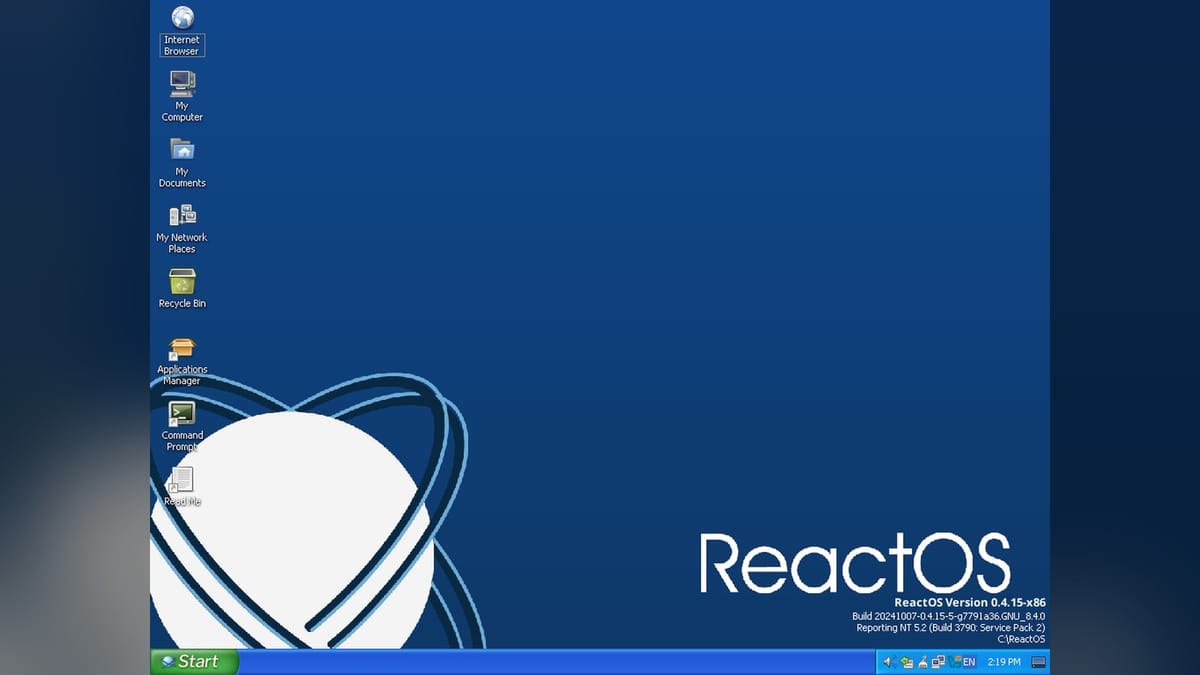
The open-source operating system ReactOS has merged its first NT6 system call. This is the project's earliest technical step toward Windows Vista compatibility. The newly added function, NtGetCurrentProcessorNumberEx, was merged into the project's codebase this week.
According to a report from OSNews, the milestone is more of an architectural signpost than an immediate feature drop. The site quotes Paul Hill at Neowin, who notes that the system call is used to return the logical processor number a caller is running on. Hill points out that it took Microsoft around half a decade to develop Vista after the release of XP. This suggests ReactOS has a long road ahead before it can run software exclusive to the Vista era.
Not a Linux distribution
ReactOS is a completely independent, open-source operating system built from scratch to be binary-compatible with Microsoft Windows. The project started way back in 1996 as FreeWin95 before pivoting to the Windows NT architecture in 1998. The goal is to run Windows drivers and applications natively through a custom kernel and driver stack. It is a monumental task of reverse engineering.
For years, ReactOS has been laser-focused on the NT5 generation, which covers Windows 2000, Windows XP, and Server 2003. Windows XP launched in 2001 and dominated the PC landscape for over a decade. That made it a logical target for an open-source clone. The broader software ecosystem has long since abandoned XP, however. Moving to NT6 (the kernel generation that started with Windows Vista in 2007 and evolved through Windows 7 and 8) is the only way ReactOS can eventually support modern applications.
Five years to build Vista
The addition of NtGetCurrentProcessorNumberEx will not magically let you boot up a DirectX 10 game tomorrow. The function does exactly what its name implies: it tells a calling thread which logical processor it is currently executing on. It is a tiny building block in a massive architectural overhaul. Vista introduced sweeping changes to how Windows handles graphics, audio, and user permissions.
Microsoft spent five years transitioning from Windows XP to Windows Vista. That development cycle, famously codenamed Longhorn, required a massive rewrite of the Windows display driver model and the introduction of User Account Control. ReactOS is attempting to reverse-engineer and rebuild that same architecture with a volunteer workforce. Vista's launch in 2007 was famously rocky, so perhaps the ReactOS team can aim to recreate the architecture without recreating the driver crashes.
The project is still in alpha, but it already shows promise for retro PC gaming. Developers have previously managed to get the original Half-Life running in-game on real hardware via the ReactOS kernel. This proves the custom driver stack can handle real-time 3D workloads. As the team slowly implements more NT6 system calls, that compatibility net will eventually widen to include the late 2000s era of PC gaming. It just might take a few more years to get there.

Comments ()