
QEMU's Jazz emulator now runs Windows NT 3.1 MIPS with networking
Systems engineer Antoni Sawicki has updated QEMU to fully emulate Microsoft's 1993 RISC operating system, complete with high-resolution graphics.
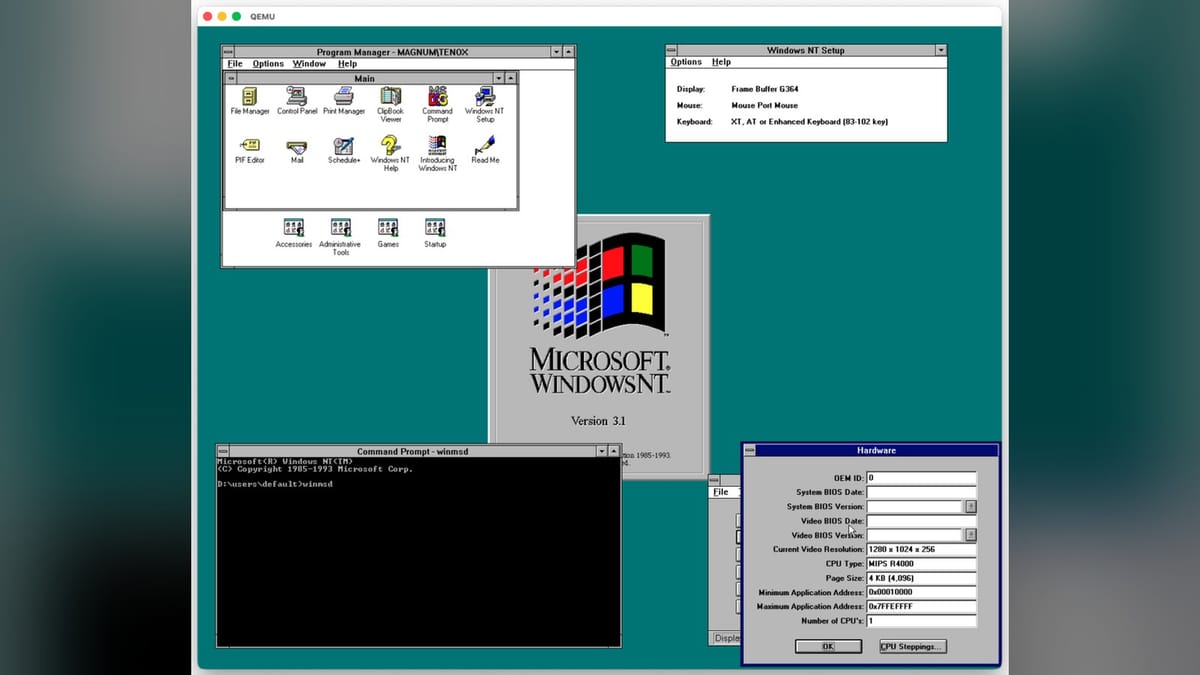
In July 1993, Microsoft released an operating system designed to run on hardware most people would never see in person. Windows NT 3.1 was built from the ground up by Dave Cutler's team to be architecture-independent, targeting both standard x86 PCs and high-end RISC workstations. One of those premier launch platforms was MIPS. In notable news for vintage computing enthusiasts, systems engineer Antoni Sawicki (known as Tenox) has managed to get Windows NT 3.1 MIPS fully running in the QEMU emulator, complete with high-resolution graphics and working networking.
The Jazz reference architecture
To understand why this is a technical milestone, you have to look at how Microsoft approached RISC in the early 1990s. The company developed a reference hardware design codenamed "Jazz" to host NT on MIPS processors like the R4000. System vendors used this blueprint to build machines like the MIPS Magnum 4000 and the Acer PICA-61. These were powerful, expensive workstations aimed at enterprise and scientific computing. They adhered to the Advanced RISC Computing (ARC) specification, a standard intended to unify the fragmented RISC market.
Windows on MIPS remained a niche oddity throughout the 1990s and early 2000s. Microsoft built NT with a Hardware Abstraction Layer specifically so it could easily port the operating system to different CPU architectures. In theory, developers could recompile their Win32 applications for MIPS, Alpha, or PowerPC and reach a broader market. In practice, most software vendors only shipped x86 binaries. If you bought a MIPS workstation, you often had to rely on built-in emulation to run standard Windows applications, which carried a massive performance penalty. The x86 architecture eventually dominated the market through sheer volume and aggressive price drops, leaving the MIPS ports of Windows NT as historical footnotes. Microsoft officially dropped MIPS support after Windows NT 4.0.
Translating instructions
The open-source QEMU project has included experimental support for MIPS Jazz hardware for years. QEMU uses a component called the Tiny Code Generator to translate instructions from the guest architecture into instructions your host CPU can understand. It's a complex process, and accurately emulating an entire motherboard requires precise timing and peripheral support.
Booting early NT 3.1 builds was a frustrating exercise. The emulator suffered from firmware incompatibilities, timer quirks, and missing peripheral routines that caused the operating system to crash or hang during the boot process. You couldn't just load up an installation CD and expect a working desktop. Previous attempts by developers to get the Jazz emulation working often stalled out at the bootloader or resulted in a system that lacked basic functionality.
Fixing the firmware traps
Sawicki updated the QEMU Jazz machine emulation code to resolve these driver and firmware traps. According to a guest post on Virtually Fun, the new patches restore functional support for the Jazz onboard G364 framebuffer adapter. This allows the virtual machine to output standard high-resolution graphics instead of relying on basic fallback modes.
Graphics are only half the battle when preserving an enterprise operating system. Sawicki also implemented proper emulation for the onboard AMD Lance and SONIC Ethernet network interface controllers. The result is a fully networked Windows NT 3.1 MIPS environment running on modern hardware. You can actually browse the web, or at least the parts of the web that a 1993 operating system can still comprehend.
Ready to run
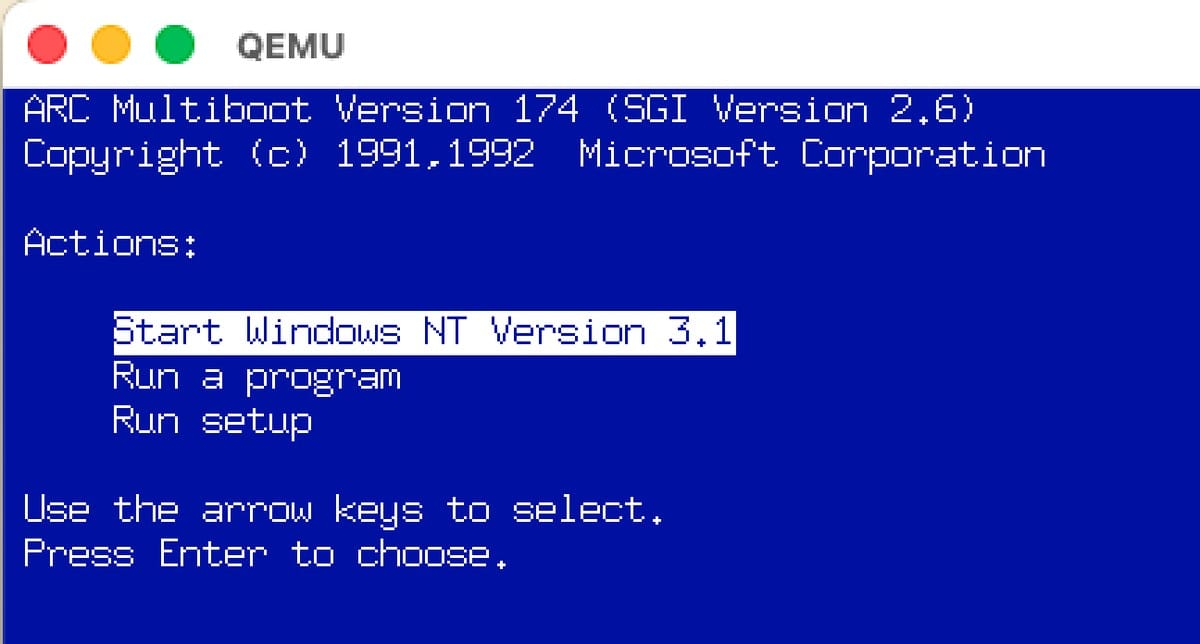
If you want to try it yourself, you don't need to compile the emulator from source or hunt down obscure firmware files. Sawicki published the updated code in a dedicated GitHub repository under the "jazz" branch. He also provided a pre-configured, LZ-compressed disk image that's ready to run immediately.
Preserving alternative architecture ports of classic operating systems is difficult work. The physical hardware is failing, and the documentation is often scarce. Finding a working MIPS Magnum 4000 in 2026 is nearly impossible, and keeping one running requires specialized knowledge and spare parts that no longer exist. Getting the MIPS build of NT 3.1 running smoothly in QEMU ensures this specific branch of computing history remains accessible long after the last physical motherboard gives out.


Comments ()