
MiSTer N64 Core Update Fixes Interlaced Video for 480i Output
The latest MiSTer N64 core update fixes line ordering for interlaced 480i modes, specifically benefiting Libdragon homebrew projects.
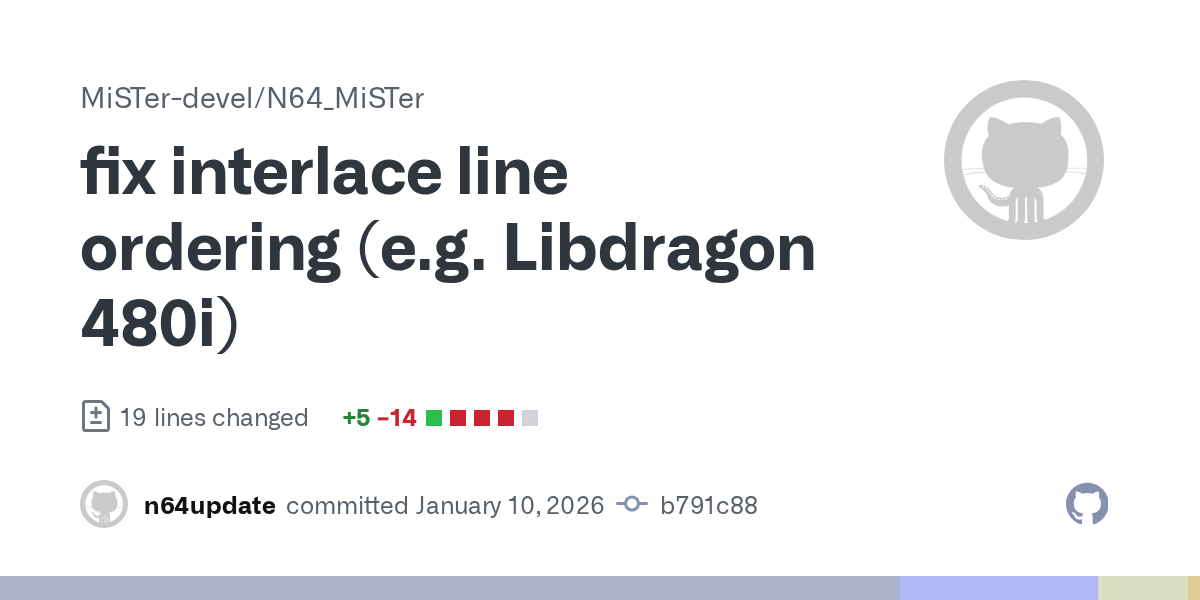
The MiSTer FPGA project has released an update for its Nintendo 64 core that corrects line ordering issues in interlaced video modes. The change, detailed in commit b791c88, specifically cites improvements for "Libdragon 480i" output and is part of release N64_20260108.
This update addresses a specific technical quirk in how the Field-Programmable Gate Array handles the N64's video signal. While the Nintendo 64 is fondly remembered for its soft, anti-aliased 240p graphics, the hardware was fully capable of outputting higher resolution 480i signals. This mode was used in select commercial titles and is increasingly popular in the homebrew scene.
Interlacing the Details
The fix targets "interlace line ordering," which dictates how the odd and even scanlines of a video frame are drawn. In an interlaced signal, the screen draws half the image in one pass and the other half in the next. If the hardware gets the order wrong, the result is usually a vibrating, jittery image that looks like the video signal had too much coffee.
According to the MiSTer N64 Core changelog, this adjustment specifically benefits software built with Libdragon. For those who don't spend their free time reading documentation, Libdragon is an open-source SDK that allows developers to write software for the N64 without using Nintendo's proprietary, and ancient, tools.
Why This Matters
Modern homebrew developers often use 480i modes to achieve sharper text and cleaner user interfaces than were typically seen in 1996. By fixing the line ordering, the MiSTer core ensures that these projects display correctly on modern displays and CRTs alike.
This is the kind of granular fix that defines the MiSTer project. It isn't enough to just run Super Mario 64, the goal is to replicate the behavior of the silicon itself, even when that involves the headache-inducing world of interlaced video signals.
Comments ()