
Kendo Rage 1&2 is coming to PS5, Switch, and PC in March 2027
Edia is bundling the 1993 SNES platformer Makeruna! Makendo (Kendo Rage) and its 1995 fighting game sequel for PlayStation 5, Switch, and Steam on March 18, 2027.
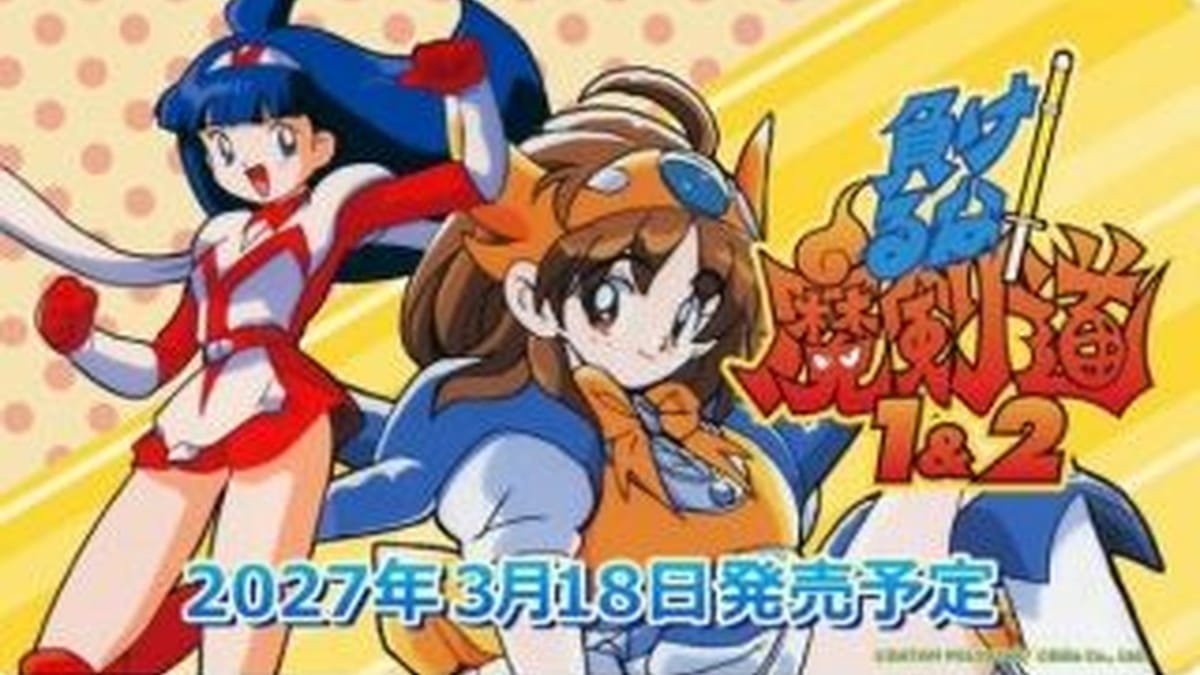
Japanese publisher Edia has announced Makeruna! Makendo 1&2, a two-game Super Famicom compilation launching on PlayStation 5, Nintendo Switch, and PC via Steam on March 18, 2027. First spotted via Ryokutya2089 before Edia opened Japanese preorders on November 24, the bundle brings back the 1993 action-platformer known in North America as Kendo Rage alongside its 1995 sequel, keeping the original 16-bit pixel art and mechanics intact.
Both games originally came out under Datam Polystar, the Polystar music label spin-off that spent the 1990s publishing quirky 16-bit console games and dating sims before going dormant and formally dissolving in February 2019. Veteran developer Success Corporation (best known for the Cotton shoot-'em-up series) now manages the Datam Polystar catalog and licensed the rights to Edia for this revival.
A five-hour walk to school, then an election tournament
Makeruna! Makendo doesn't stick to one genre, and these two entries play nothing alike. Developed by Affect and released on the Super Famicom in January 1993, the first game is a seven-stage side-scrolling platformer starring 16-year-old Mai Tsurugino, who lives deep in the mountains and faces a five-hour walk to school every morning. A yokai detective talks her into fighting escaped monsters along the route with a magic bamboo sword, and an in-game clock ticks down so she isn't tardy for homeroom.
When SETA localized the cartridge for the North American SNES as Kendo Rage in October 1993, it rewrote the script completely. Mai became an American teenager named Josephine "Jo" heading to summer kendo camp in Japan, and several sprites were altered along the way. What I can't tell yet is whether Edia has the rights or the inclination to include SETA's oddball 1993 localization as a bonus ROM, since only the Japanese release is confirmed so far.
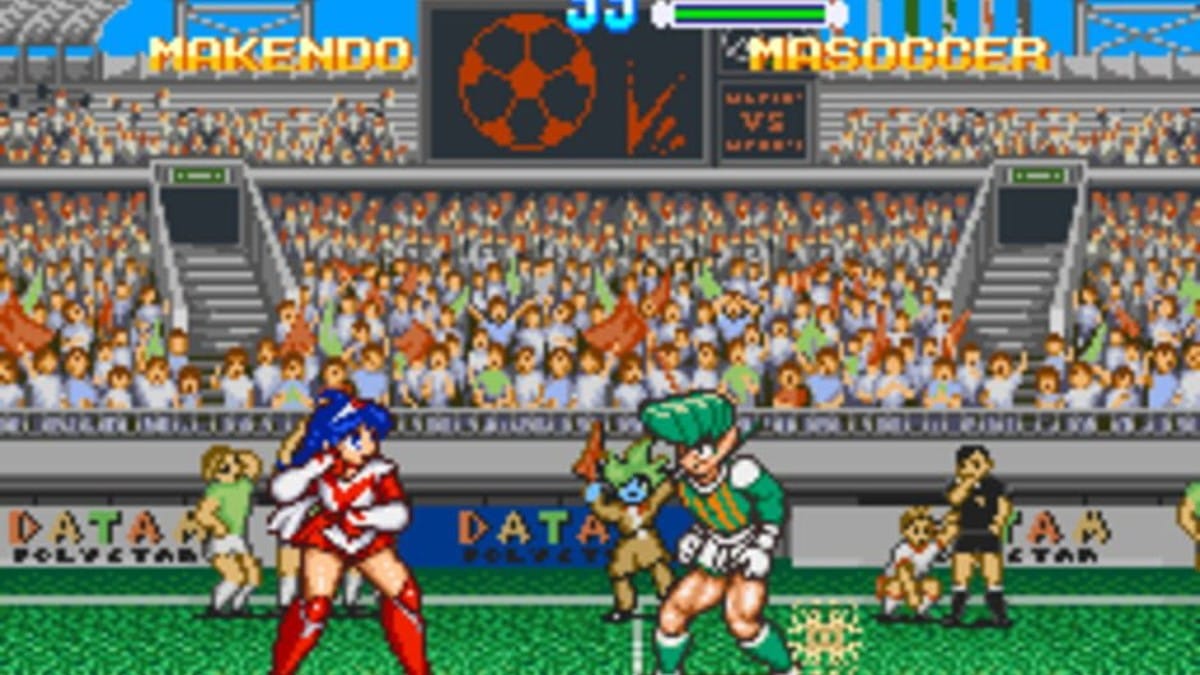
The March 1995 sequel, Makeruna! Makendo 2: Kimero! Youkai Souri, dropped platforming entirely for a one-on-one 2D fighter co-developed by Success and Opus. Mai turns down an invitation to fight in a tournament to crown the "Yokai Prime Minister," so her younger sister Hikari enters in her place. Beneath the slapstick premise, it's a surprisingly technical fighter with move cancels, MP-fueled buffs, and opponent debuffs.
While the Super Famicom version of the sequel stayed in Japan, Fill-in-Cafe ported it to the original PlayStation in November 1995, and GungHo later put that PS1 build on the North American PlayStation Network as an unlocalized import for PS3 and PSP in 2012. The original 1993 game hasn't been nearly as lucky. It never got a modern digital re-release, leaving loose North American SNES carts selling for around $50 to $55 on the collector's market, while complete-in-box copies climb past $100 to around $150.
No PC-FX RPG, and steep import pricing
This package stops at the 16-bit entries. A third game, Fill-in-Cafe's 1998 turn-based RPG Makeruna! Makendo Z for NEC's ill-fated PC-FX console, isn't included here (nor is the 1995 OVA anime).
Edia has made a habit of rescuing obscure 1990s Japanese catalogs over the past few years, starting with its acquisition of Telenet Japan's library for the Valis collections and continuing through 2026 with compilations for Aretha and Tenshi no Uta. Like several of those projects, Makeruna! Makendo 1&2 doesn't have an English localization or Western publisher attached yet, though the Switch game cards and PS5 discs are region-free and the Steam release puts it on a global storefront.
Japanese pricing is steep for two Super Famicom ROMs. Standard physical and digital copies cost 8,580 yen with tax (about $54), which is a tough ask if there aren't substantial museum extras or English text in the box. PS5 and Switch collectors can also opt for a 16,280-yen (roughly $102) Special Edition that bundles a poster-style wall tapestry, reprinted promotional flyers, and a soundtrack CD containing bonus audio tracks alongside a theme song that doesn't appear in the games themselves.
Comments ()