
JagOS 'Spot' turns the Atari Jaguar into a desktop computer
Developer Clint Thompson is building a graphical operating system for the Jaguar, based on Atari's canceled 1992 Painter prototype.
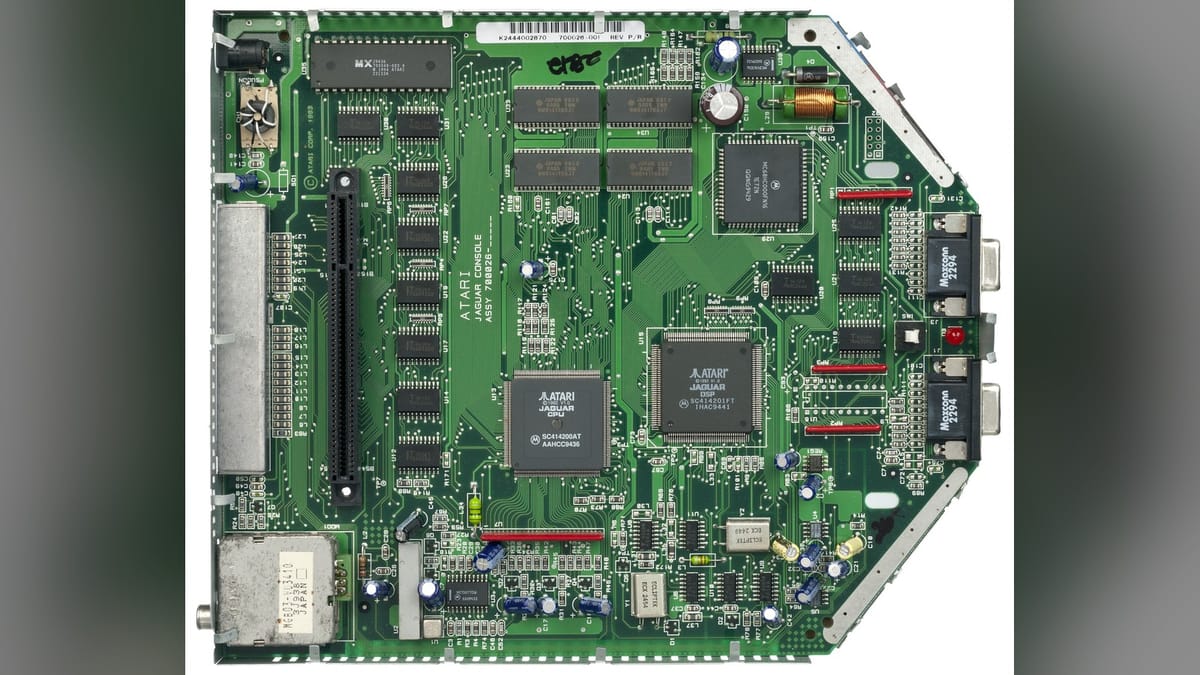
Developer Clint Thompson has previewed JagOS 'Spot', a work-in-progress graphical operating system designed to run on a stock Atari Jaguar. The project, first shown on the AtariAge forums earlier this week, reimagines what Atari's unreleased Painter computer prototype might have looked like had it made it to market.
The operating system boots via a RetroHQ GameDrive flash cartridge. According to OSNews, Thompson is currently gauging community interest before deciding whether to release the code as it currently stands or continue developing it into a more robust package.
The Painter prototype
To understand why someone is building a desktop environment for a 1993 game console, you have to look at Atari's internal hardware plans from a year earlier. In August 1992, an Atari research and development team led by Richard Miller conceptualized a hybrid personal computer codenamed Painter. The idea was to follow up the Falcon030 computer with a machine utilizing the custom RISC processing hardware Atari was simultaneously developing for the Jaguar.
CEO Sam Tramiel even publicly suggested in 1993 that the Jaguar hardware could spawn a new family of desktop computers. That never happened. Atari canceled the Painter project entirely to focus all its remaining resources on launching the Jaguar console in November 1993. The console struggled against the Sony PlayStation and Sega Saturn, selling roughly 150,000 units before Atari discontinued it in 1996 and reverse-merged with hard drive manufacturer JTS.
Tom, Jerry, and a calendar
The Jaguar is notoriously difficult to program. Its multi-chip architecture relies on two custom 32-bit RISC chips named Tom and Jerry, alongside a standard Motorola 68000 processor. Getting those chips to work in tandem for standard games was a hurdle for professional studios in the 1990s. Building a functional graphical user interface on that same silicon three decades later is a massive technical flex.
JagOS 'Spot' includes a mouse-driven desktop environment, a calendar, a calculator, and basic networking utilities. It also features a few simple games built directly into the OS. I want to see how those networking utilities actually function on a stock Jaguar, considering the console never had official online capabilities outside of a few unreleased modem prototypes.
Thompson is an active member of the Atari homebrew community, but he noted in his initial announcement that he is slow at releasing projects due to a lack of free time. He usually avoids showing software while it is still in progress. The current preview is meant to push the project along and see if the community wants to tinker with it.
The Atari Jaguar homebrew scene remains highly active. Independent developers regularly produce new games and ports for a console that only saw around 50 official releases during its commercial lifespan. The RetroHQ GameDrive has made it much easier to test and distribute these projects on real hardware, bypassing the need for expensive custom cartridge boards. If Thompson releases the binaries for JagOS, it will give that community a completely new way to interact with the system. For now, the project remains a fascinating look at an alternate timeline where Atari successfully transitioned its 64-bit console architecture back into the personal computer market.

Comments ()