
F/A-18 Hornet and the Accidental Aesthetic of Untextured Polygons
Graphic Simulations' 1993 Mac flight sim proves that technical limitations can age better than photorealism.
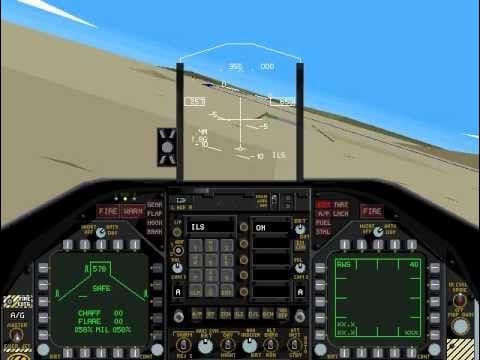
There is a specific kind of visual purity found in early 3D flight simulators that modern graphics cards struggle to replicate. It usually involves a stark blue sky, a ground made of three colors, and enough flat shading to cut glass. While modern engines fight to render individual rivets on a fuselage, the early 90s made do with sharp triangles and imagination.
As highlighted by Nicole Express, the 1993 release of F/A-18 Hornet for the Apple Macintosh serves as a perfect case study for this visual style. Developed by Graphic Simulations, the title arrived during a transitional era where developers had to choose between texture detail and performance. Graphic Simulations chose the latter.
The Art of Omission
The result is a look that Nicole Express describes as the moment "when technical limitation transcends into an aesthetic." By forgoing complex textures, the game achieved high frame rates and maintained crisp, untextured polygons. The visuals are not muddy or confused. They are clinical and precise.

In 1993, texture mapping was often the enemy of fluid motion. If you wanted the McDonnell Douglas F/A-18 to handle with any degree of realism, the computer could not waste cycles drawing dirt on the runway. Consequently, the game presents a world of solid colors and sharp geometry. It looks less like a photograph, and more like a technical blueprint come to life.
Aging Gracefully
We often categorize early 3D graphics as a rough draft for the photorealism we have today. However, titles like F/A-18 Hornet suggest that untextured polygons are a distinct medium rather than a failed attempt at reality. This flat-shaded style avoids the pixelated, warping textures that plagued the PlayStation and Saturn era a few years later.
This clean aesthetic has seen a resurgence in indie development recently, but there is something distinct about the original article. It was not a stylistic choice made for nostalgia. It was a necessary compromise that happened to look excellent.


Comments ()