
Death Note: Successors to L has a full English patch on DS
The Anime Game Translations Team has released an English patch for Konami's 2007 board game hybrid, completing the Nintendo DS Death Note trilogy.
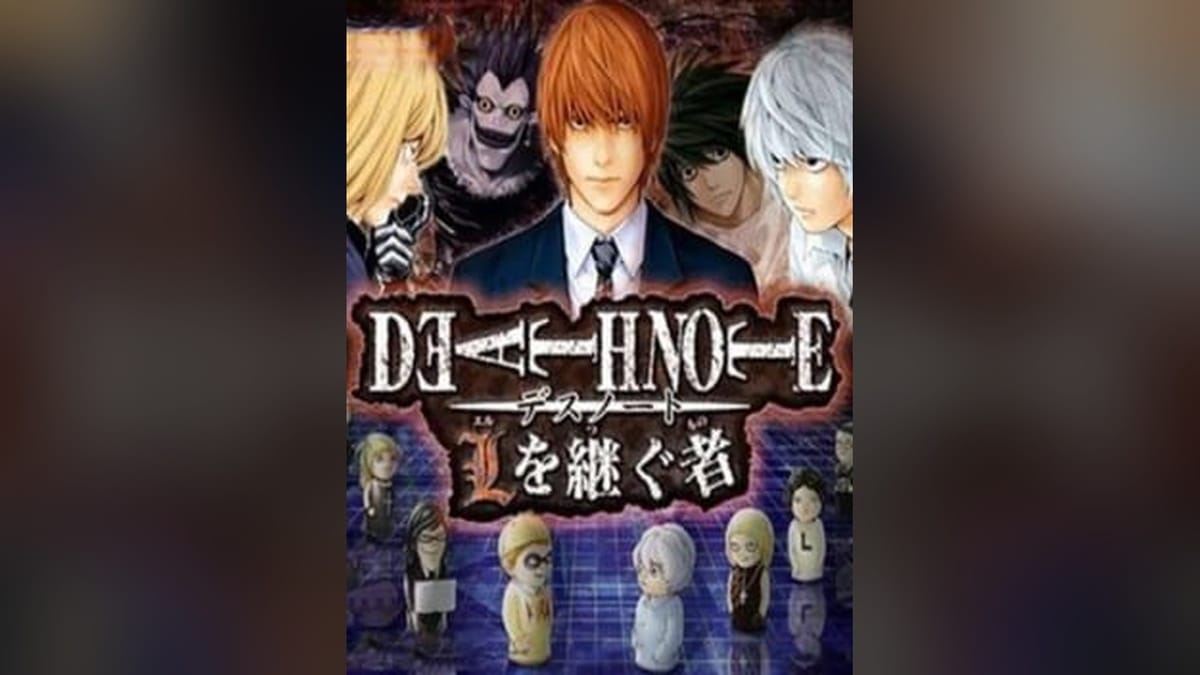
The Anime Game Translations Team has released a complete English patch for Death Note: Successors to L on the Nintendo DS. The 2007 Konami release is the second installment in a trilogy of Japan-exclusive adaptations, and this patch makes the entire series playable in English for the first time.
The group released the patch alongside a launch trailer early this morning. Successors to L covers the complete manga storyline, starting from Light Yagami discovering the notebook and ending at the Yellow Box Warehouse showdown. It sits between 2007's Kira Game and 2008's L the ProLogue to Death Note: Spiraling Trap, both of which the same translation team previously localized.
Scotland Yard on a grid
Konami built the game around asymmetrical multiplayer mechanics heavily inspired by the tabletop game Scotland Yard. Players take on the role of either Kira or the investigation team led by L, Near, and Mello. The two sides have different objectives across a grid-based map.
The DS dual screens handle the hidden information. The top screen displays the public map, while the bottom touchscreen manages the secret movements and trap placements. Playing as Kira requires placing hidden death traps, swapping disguises, and moving toward goal points without being detected. The investigation squad plays a completely different game, positioning cameras and gathering forensic evidence to corner the suspect carrying the notebook.
It's a strange structural choice for an anime adaptation, but it fits the cat-and-mouse premise of the source material better than a standard dialogue tree would. I'm curious how the balance holds up when playing against another person, since asymmetrical board games usually require extensive playtesting to prevent one side from dominating.
Two sprite options
The patch includes two different installation options. Players can choose a version that preserves the original Japanese sprite artwork, or apply a variant that uses custom recolored character sprites to better match the anime's broadcast color palette. The translation group had been posting progress reports on the project since mid-2024, dealing with the game's compressed text formatting and custom UI elements.
The final release requires a legally dumped ROM of the original Japanese cartridge to apply the xdelta patch format. Once patched, the game runs on original hardware via a flashcart or through standard PC and mobile emulators.
Konami was particularly prolific on the Nintendo DS during this period. Beyond their flagship Castlevania titles, the publisher maintained a steady output of licensed games, puzzle titles, and experimental touchscreen software. The Death Note trilogy represents a specific era of Japanese game development where publishers were willing to fund weird, genre-blending concepts as long as they had a recognizable brand attached to the box.
The Nintendo DS hosted a massive library of licensed anime games that never left Japan. Publishers treated the handheld as a primary platform for mid-budget adaptations, largely because the system's 154 million install base guaranteed a return on investment even without international sales. Many of these games remained trapped in Japan because the licensing rights were too complex to untangle for Western publishers, or because the properties lacked international television deals at the time of release. Fan translation groups have spent the last decade working through this specific backlog, and completing a full trilogy from a major publisher closes a notable gap in the system's English library.

Comments ()