
Command & Conquer: Red Alert turns 30
Westwood Studios released a real-time strategy game about time travel and Tesla coils three decades ago, and PC gaming was never the same.
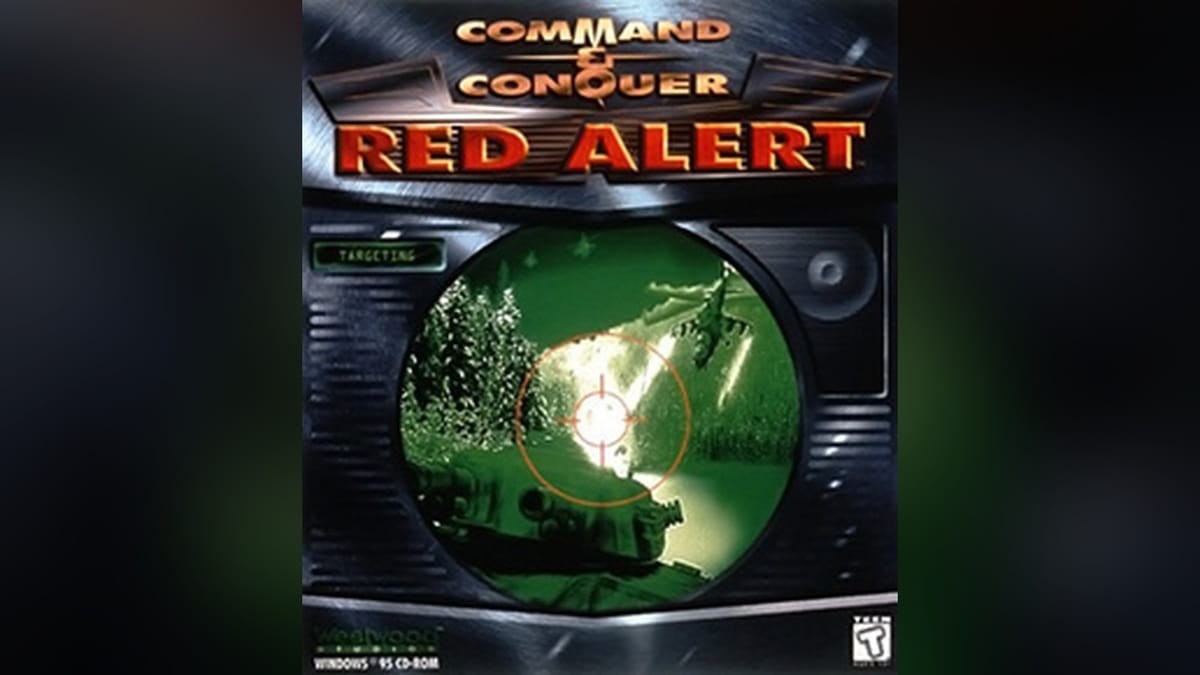
The boot sequence of a 1996 PC usually ended with the screech of a US Robotics modem connecting to a friend's house. Thirty years ago, Westwood Studios released Command & Conquer: Red Alert. It was a prequel to their 1995 hit, but it became a cultural monolith that defined real-time strategy for a generation.
Dial-up and destruction
Before broadband made matchmaking invisible, multiplayer required real physical effort. LAN parties meant hauling heavy CRT monitors to basements, memorizing IP addresses, and spending hours troubleshooting dial-up modems just to get a two-player match running. Red Alert rewarded that effort with a perfectly balanced asymmetry.
The Allied forces had naval superiority and the Chronosphere, which teleported units across the map. The Soviets relied on brute force and the Iron Curtain, rendering vehicles temporarily invincible. According to the Wikipedia history of Red Alert, the game moved 1.5 million copies in its first month alone. That success came from a core design philosophy that forced players to exploit their faction's specific strengths. You couldn't just build a massive army and right-click the enemy base. A Soviet player needed to protect their power plants, because a base without electricity meant the Tesla coils went offline. An Allied player had to hit fast and retreat before the heavy armor arrived.
Like its predecessor, the game featured split routes for most missions. The core objective stayed the same, but the map layout changed depending on which arrow you clicked during the briefing. It's what gave the campaign a sense of scale. Westwood eventually ported the game to the PlayStation in 1997, complete with mouse support. They followed it up with Retaliation, a console-exclusive compilation of the Counterstrike and The Aftermath expansion packs that added new FMV briefings.
Einstein shakes a hand
The premise is absurd. Albert Einstein travels back to 1924, meets Adolf Hitler outside Landsberg Prison, and erases him from the timeline. This leaves Joseph Stalin unchecked to invade Western Europe. Westwood delivered this narrative through full-motion video cutscenes that remain the gold standard for video game camp, featuring actors who delivered completely unhinged dialogue with absolute, deadpan sincerity.
Westwood Studios built a 50,000 square foot facility in Las Vegas to handle their growing ambitions. A presentation by co-founder Louis Castle details how the studio transitioned from 8-bit ports to defining the RTS genre. The live-action briefings in Red Alert gave the game a personality that modern strategy titles rarely achieve. You weren't just a floating camera. You were the commander, taking direct orders from Stalin or Allied leadership.
The sound of the boots
You can't talk about Red Alert without talking about the music. Frank Klepacki was just a teenager when he started at Westwood. By the time he scored Red Alert, he was blending industrial metal, funk, and electronic music into something he called Rocktronic.
His defining track almost belonged to a different game. As noted in the Frank Klepacki biography, he originally wrote "Hell March" for the Brotherhood of Nod in a Tiberian Dawn expansion. Director Brett Sperry heard the mix of electric guitar riffs and sampled marching boots and immediately claimed it as the signature theme for Red Alert.
The history of Hell March shows how much technical work went into that sound. Klepacki used an Ensoniq ASR-10 sampler and a Roland JD-990 synth module to push the studio's new 22 kHz audio capabilities. He pulled influences from Nine Inch Nails and Ministry to supply the heavy industrial style. The voice samples in the songs sometimes conflicted with the in-game unit barks, leading Westwood to remove some vocal tracks from the PC release. They survived on the official soundtrack album, which Westwood sold directly through their website. The result won Best Video Game Soundtrack of 1996 from PC Gamer, beating Trent Reznor's work on Quake. It deserved the win.
Thirty years later
The game hasn't ever really gone away. Electronic Arts acquired Westwood in 1998 and eventually released the original Red Alert as freeware in 2008. Twelve years after that, they published a 4K visual overhaul in the Remastered Collection.
Modern strategy games often drown the player in tech trees and micro-management. Red Alert didn't overcomplicate things. You mined ore, you built power plants, and you massed your forces. The cultural footprint of that loop is massive. It taught an entire generation of PC gamers how to manage an economy while under fire. It's a formula that holds up three decades later.

Comments ()