
Someone ported Celeste Classic to the Sega Saturn
The original 2015 PICO-8 prototype of Celeste is now playable on Sega's 32-bit console thanks to a new homebrew port.
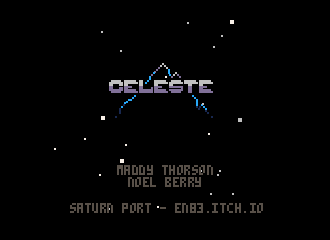
Homebrew developer en83 has released a port of Celeste Classic for the Sega Saturn. The project is available to download as a playable disc image on itch.io and the SegaXtreme forums.
To be clear, this is the original 2015 PICO-8 prototype created by Maddy Thorson and Noel Berry during a four-day game jam. It is not the massive 2018 retail release. I absolutely love demakes and ports to older gaming consoles. This is a wonderful port that brings the tight, brutal platforming of the original prototype to Sega's 32-bit machine.
Running on the Jo Engine
The Saturn is notoriously difficult to program for. Sega built the console with dual Hitachi SH-2 processors, two custom video display processors, and a complex memory architecture that frustrated developers in the 1990s. Getting anything to run on original hardware requires specialized tools.
Developer en83 built this port using SDL and the Jo Engine. Created by Johannes Fetz in 2013, the Jo Engine is an open-source 2D and 3D game engine specifically designed for Sega Saturn homebrew. Before its release, Saturn homebrew was mostly limited to simple tech demos or required developers to use Sega's official development libraries from the 1990s.
The Jo Engine changed that by providing modern C libraries and compiling tools. It handles the heavy lifting for sprite rendering, controller input, and audio playback. The itch.io page notes that the port runs smoothly. It translates the PICO-8 virtual machine logic into something the Saturn can natively understand without forcing the developer to write raw assembly code.
From PICO-8 to 32-bit
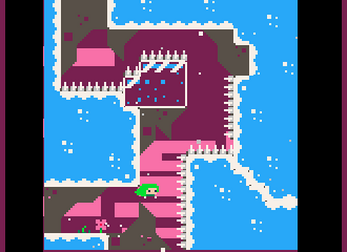
Celeste Classic has quietly become the modern equivalent of Doom for the homebrew community. Because the original game was built for the PICO-8 fantasy console, it has strict limitations built right into its design. The game uses a 128x128 pixel resolution, a 16-color palette, and extremely lightweight code.
Lexaloffle's PICO-8 is a virtual machine designed to look and feel like an 8-bit console that never existed. Games are distributed as special PNG image files called cartridges. Because the entire game logic is contained within a tiny file size, reverse-engineering the code for other platforms is a straightforward process for experienced programmers.
Those limitations make it an ideal candidate for retro hardware ports. Over the last few years, fans have brought the game to the Game Boy Advance. The Saturn version joins a growing list of unofficial ports that keep the 2015 prototype alive on physical media.
Hoping the lawyers stay away
Whenever an unofficial port of a popular game surfaces, there is always a lingering fear of a cease and desist letter. I am hoping this project avoids any sort of takedown notice and the original developers embrace it instead.
Fortunately, the team at Extremely OK Games has a strong track record of supporting their community. They actually included Celeste Classic as a hidden minigame inside the 2018 retail release of Celeste. They also released a sequel, Celeste Classic 2, for the PICO-8 in 2021 to celebrate the game's third anniversary. Given their roots in the indie and game jam scenes, they seem to view these fan projects as a compliment rather than a threat to their intellectual property.
The Saturn port is a great excuse to revisit the mountain. The core mechanics of dashing, jumping, and dying repeatedly are fully intact. It is a neat technical achievement for a console that usually gets ignored in the modern homebrew scene.
Comments ()