
Castlevania turns 40, and Konami finally has a new game coming
Konami's legendary whip-cracking franchise turns 40 this September, and a new game is on the horizon.

The original Castlevania launched in Japan on the Famicom Disk System on September 26, 1986. Forty years later, we're still finding that sweet sweet wall chicken.
Konami's Castlevania 40th Anniversary - Overture
Two Nintendo cabinets in a dark room
I have a distinct memory of standing in a dimly lit roller rink, staring at two Nintendo arcade cabinets: one was Castlevania, the other a Goonies game. I played the Goonies game first because I loved the movies, and it was pretty good. Then I moved over to Castlevania. I did not get very far, but I loved it anyway.
My memory insists the other cabinet was The Goonies II. Nintendo's PlayChoice-10 and Vs. System arcade hardware actually ran the original Goonies. Memory is a funny thing. What I do remember clearly is the atmosphere. It was the middle of the satanic panic. Playing a game about Dracula and demons felt like I was getting away with something my elders might not approve of. Have you ever played arcade games in roller skates while also trying not to spill your fountain coke? Wild times.
Three games in three years
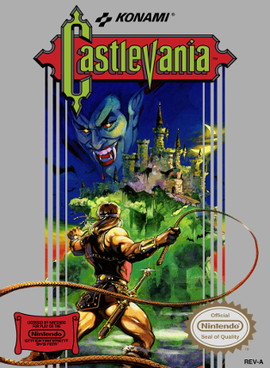
The series started strong on the Nintendo Entertainment System. Castlevania came to the North American NES in 1987, putting you in control of Simon Belmont and his whip. The controls are rigid: you commit to every jump, the knockback is real, and the bats are frustrating. Somehow, it's amazing.
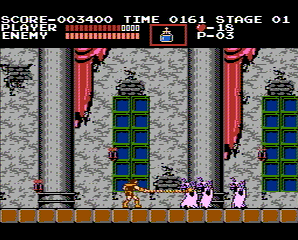
Castlevania II: Simon's Quest hit the NES in 1988 in North America. It added a day and night cycle. It also has an open world map. You collect hearts to buy items.
Castlevania III: Dracula's Curse arrived in 1989 in Japan and 1990 in North America. It is a prequel. You play as Trevor Belmont. It brought back the linear platforming. It also added branching paths and multiple playable characters.
Mode 7 and the SNES cartridge limits
Super Castlevania IV launched in 1991. It used the Super NES Mode 7 graphics to spin rooms around. It let you whip in eight directions. The whip physics alone make it worth playing today.
Castlevania: Dracula X came to the SNES in 1995. It is not a direct port of the PC Engine game Rondo of Blood. It has different levels and altered gameplay elements. Konami had to make changes due to cartridge limits.
Stuck on a Japanese CD-ROM
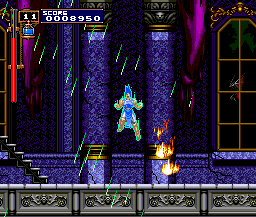
Castlevania: Rondo of Blood released exclusively in Japan on the PC Engine Super CD-ROM² in 1993. It stars Richter Belmont and Maria Renard. Western fans relied on expensive imports and fan translations for years. This was a game of school yard legend. "Did you hear about that TurboGrafx-16 Castlevania game? I heard it's better than anything we ever got!" We finally got official releases much later. It hit the PSP as The Dracula X Chronicles in 2007. It also appeared on the Wii Virtual Console and the PS4 Requiem collection. I played it on some fan translated turbografx-CD disc I got from eBay. I highly recommend playing it that way.
A 2D game on a 3D console
Castlevania: Symphony of the Night launched on the PlayStation in 1997, and I was skeptical at first: it was a 2D game when I thought 3D polygons were the only future. Then it blew me away. The visuals and the exploration mechanics were incredible, and playing as Alucard through an inverted castle reshaped nearly every Castlevania game that followed. I could write a dissertation on the music alone. If you haven't played it, play it. I'm not saying the series peaked here, but this is hard to beat: the later games have great quality-of-life updates, but this one still holds up.
The Circle of the Moon era
I call the Game Boy Advance years the Circle of the Moon era. Castlevania: Circle of the Moon was a Game Boy Advance launch title in 2001. It has a card-based Dual Set-Up System for magic.
Castlevania: Harmony of Dissonance followed in 2002. It focuses on Juste Belmont.
Castlevania: Aria of Sorrow arrived in 2003. It is set in the futuristic year of 2035. It introduces the Tactical Soul system.
Castlevania Dominus Collection Trailer
Drawing seals on a dual screen
Castlevania: Dawn of Sorrow hit the Nintendo DS in 2005. It continues Soma Cruz's story. It uses the DS stylus for a Magic Seal system. You have to draw patterns to defeat bosses.
Castlevania: Portrait of Ruin came out in 2006. It lets you swap between Jonathan Morris and Charlotte Aulin.
Castlevania: Order of Ecclesia released in 2008. It stars Shanoa. She uses a Glyph combat system instead of a traditional whip.
A new game in 15th century Paris
In October, Konami announced Castlevania: Belmont's Curse, set in 15th century Paris and coming out later in 2026. The franchise's style is still mimicked everywhere: most people call these games "metroidvanias," a term that makes me puke in my mouth. I prefer "gated exploration."
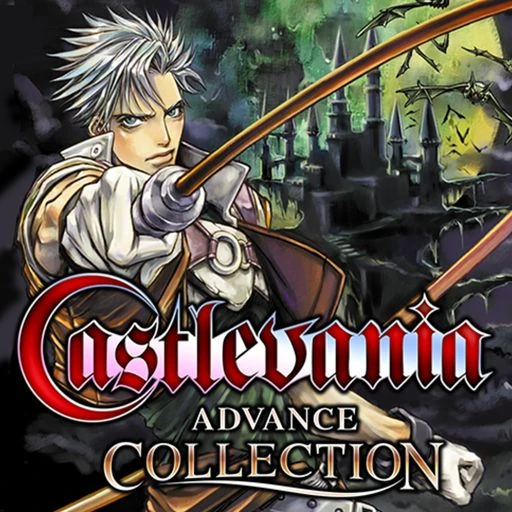
Konami has been good about modern ports. The Castlevania Advance Collection and the recent Castlevania Dominus Collection put these handheld games on modern consoles and PC. You do not have to hunt down expensive original cartridges.
The Belmont's Curse announcement trailer.
The future of the series
For years, Konami took a lot of slack for not honoring their game series and focusing on gyms and gambling machines, but I feel they've been doing good long before this announcement. Konami is back, and this solidifies it. I hope for more seasons of the Castlevania Netflix show, and I hope the in-game universe expands far past gated explorers. This series could work in almost any genre.
The games I missed
I have not played every Castlevania game, and my backlog is long enough that we cannot cover everything here. There are Game Boy titles like The Castlevania Adventure, a handful of Nintendo 64 games, and Castlevania: Bloodlines on the Sega Genesis. The PS2 had its own 3D entries, there is the whole Lords of Shadow reboot series, and even arcade games like Haunted Castle. I look forward to catching up on the ones I missed.
Comments ()