
CachyOS January 2026 Update Cuts Bloat and Switches to Limine Bootloader
The performance-focused Linux distribution starts 2026 with a leaner installer, intelligent architecture detection, and a new default bootloader.

The team behind the performance-oriented Linux distribution CachyOS has released its first snapshot of the year, introducing a significantly reworked installer and a transition to a new default bootloader. According to the official release notes, the January 2026 update focuses heavily on streamlining the initial setup process for users, reducing download sizes, and modernizing the boot sequence.
For those who haven't spent the last few years deep in the Linux trenches, CachyOS occupies a specific niche in the PC gaming ecosystem. It is based on Arch Linux but differentiates itself by offering packages compiled with aggressive optimizations for modern processors (specifically x86-64-v3 and v4 instruction sets). While standard distributions aim for maximum compatibility with ancient hardware, CachyOS assumes you are running something built in the last decade and wants to squeeze every frame out of it. It has become a favorite for gamers who want the flexibility of Arch without the manual labor of building a system from a command line.
The Installer Diet
The most practical change in this release involves how the operating system handles installation media. The developers have moved architecture detection to the very beginning of the installation process. This might sound like a minor backend tweak, but the result is tangible: the download size has dropped by approximately 1 Gigabyte.
Previously, the installer likely carried multiple sets of packages to accommodate different CPU architectures, only deciding which ones to use later in the process. By identifying the hardware immediately, the system trims the fat before the installation really begins. Additionally, the team has tweaked the package manager behavior.
"We now pass the --needed flag to pacman to avoid reinstalling up-to-date packages," the CachyOS team explained in the announcement.This is a small logic change that prevents the system from redundantly downloading and installing software that is already present and current, further speeding up the deployment time.
Goodbye GRUB, Hello Limine
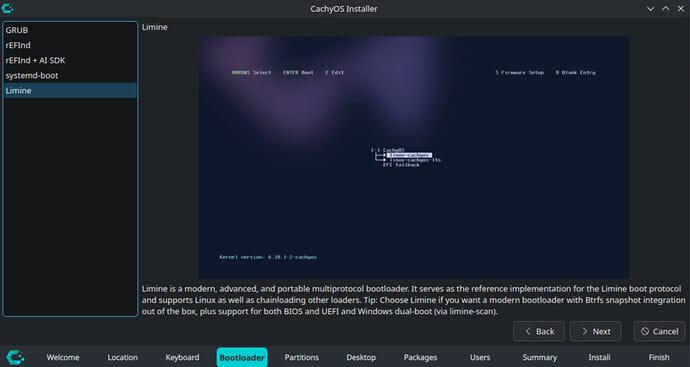
The update also marks a shift in how the system boots. The installer now features an integrated bootloader selection screen with descriptions for each option, but Limine is now selected as the default.
For decades, the Grand Unified Bootloader (GRUB) has been the standard for most Linux distributions. It is reliable, but it is also ancient and complex. Limine is a modern alternative that has gained traction in the enthusiast community for being lightweight and easier to configure. It supports modern protocols out of the box and generally feels less like a relic from the 1990s. Making it the default suggests CachyOS is confident in its stability for general users.
Storage and Display Tweaks
The update includes specific optimizations for users running NVMe drives with the BTRFS file system. The installer now defaults to compression level 1 for these configurations. BTRFS is a copy-on-write file system that offers advanced features like snapshots (allowing you to roll back your system if an update breaks something), but its performance can vary based on configuration. Setting a default compression level is a move to balance disk space savings with read/write speed, ensuring that high-speed NVMe drives aren't bottlenecked by aggressive compression algorithms.
On the visual side, the ISO has switched to the Plasma Login Manager. This provides a more cohesive visual experience for users of the KDE Plasma desktop environment, which is often the preferred choice for Linux gamers due to its similarity to Windows and its robust support for variable refresh rates and HDR.
The Arch-Based Advantage
Updates like this highlight why the "Arch-based" ecosystem continues to thrive for gaming. While Valve's SteamOS (also Arch-based) dominates the handheld market with the Steam Deck, desktop users often want more control or newer kernels than what Valve provides. CachyOS sits in that gap. It offers the rolling-release model of Arch—meaning you get updates for drivers and software as soon as they are available—but wraps it in a user-friendly installer that handles the complex optimizations automatically.
By refining the installer and reducing the initial download footprint, CachyOS removes friction for users migrating from Windows. The less time a user spends fighting the installer, the sooner they can get to the important part: figuring out which Proton version runs Elden Ring without stuttering.



Comments ()