
A massive Apple Museum just opened in the Netherlands
A new 2,000-square-meter facility in Utrecht houses interactive exhibits, a replica of Steve Jobs' garage, and plenty of classic gaming hardware.

A massive 2,000-square-meter Apple Museum has officially opened its doors to the public in Utrecht, Netherlands. The facility launched on April 2 to coincide with Apple's 50th anniversary. It is located inside The Wall shopping center and houses five decades of computing history.
The project was spearheaded by Ed Bindels. He is the owner of the Dutch Apple reseller Amac. Bindels funded the multi-million euro project himself by selling Apple stock he purchased in 2009. The museum is managed by a non-profit foundation to ensure the collection remains accessible to the public permanently.
I still have my Flower Power iMac
I think this museum looks amazing. I have an Apple IIGS, a Mac 128, a Mac Classic, a Classic II, and a Flower Power iMac in my personal collection. I would love to visit this place and see how my modest setup compares to a curated 2,000-square-meter facility.
Physical preservation of early computing hardware is difficult. Old capacitors leak, plastics yellow, and proprietary components fail. Having a dedicated space to maintain these machines in working order is necessary for hardware historians. Apple hardware is notoriously closed off and difficult to repair. This makes physical preservation spaces even more important for understanding the evolution of personal computing.
Playing Oregon Trail on real hardware
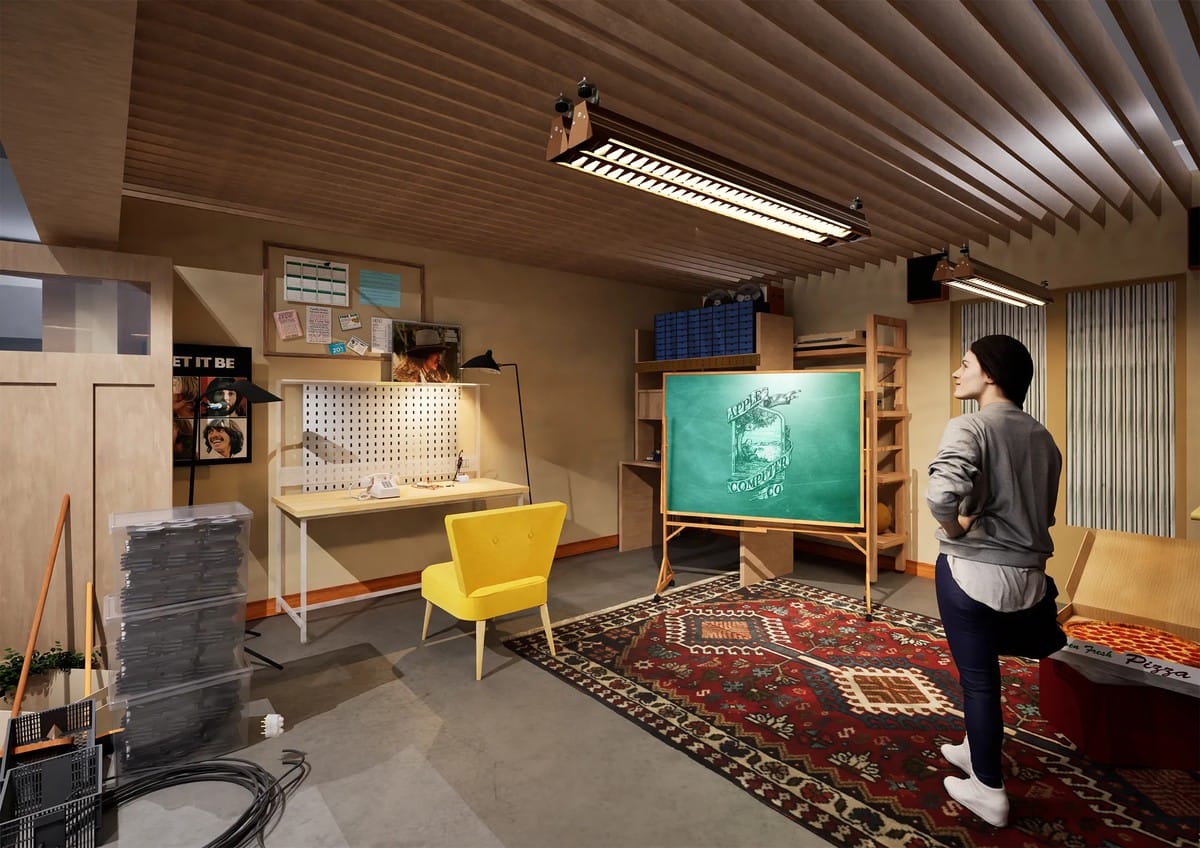
The exhibits follow a chronological timeline. Visitors start in a physical replica of the California garage where Steve Jobs and Steve Wozniak built the first Apple computers. The space includes a replica of the original Apple I bare circuit board.
The museum prioritizes interactive displays over static glass cases. Visitors can sit down at an Apple II and play a round of The Oregon Trail. The Apple II was a foundational platform for the video game industry. Richard Garriott created the first Ultima games on the system. Sir-Tech launched the Wizardry series on the Apple II. John Carmack even programmed his first games on the platform before co-founding id Software.
Other stations allow guests to try out early productivity software like VisiCalc, MacPaint, and MacWrite on original Macintosh hardware. The original Macintosh line also had a distinct gaming ecosystem. Titles like Myst and Bungie's Marathon series pushed the boundaries of what desktop computers could do in the early 1990s. Giving modern users a chance to feel the original single-button mouse and hear the mechanical hum of a floppy drive provides context that emulators simply cannot replicate.
A wall of colorful plastic
A massive wall displaying every color of the iMac G3 covers the later eras of the company. When the iMac launched in 1998, it completely changed industrial design in the technology sector. Beige boxes were out, and translucent plastics were in.
There is also a booth where visitors can record their own dancing silhouette video styled after the early 2000s iPod commercials. The collection continues through the portable era with various generations of iPods, iPhones, and the Apple Watch.
Bindels spent over five years collecting and restoring the hardware on display. The museum even includes an empty gallery space. The foundation left room for whatever hardware comes next.
Comments ()