
Apple Arcade just added a 10-game retro collection for Vision Pro and iPhone
Retrocade brings arcade classics to Apple's subscription service, but early user impressions suggest the touch controls and unlock systems might need tuning.
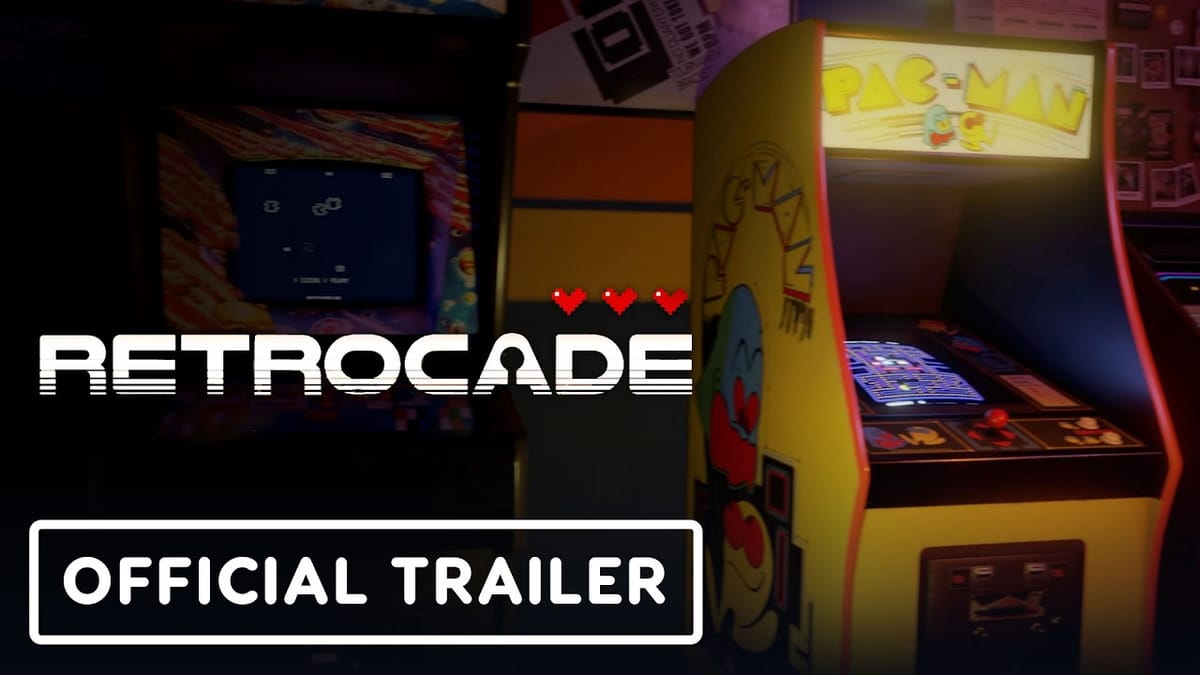
Apple Arcade subscribers can now download Retrocade, a new compilation of ten classic arcade titles available for the Apple Vision Pro, iPhone, and iPad. The collection launched this week on Apple's subscription service, offering a mix of vintage gameplay with modern emulation features like CRT filters and selectable bezel art.
The launch trailer highlights the cabinet-style presentation available on Vision Pro.
The app appears to focus on the 1980s golden age of coin-op gaming. According to the App Store listing and early user reports, the library includes staples such as Pac-Man, Centipede, and Bubble Bobble. While the full game list wasn't detailed in the initial promotional text, the inclusion of these specific titles suggests a curated mix of licensed hits rather than a random assortment of obscurities.
Touchscreen translation issues
Bringing arcade games to mobile devices always introduces a specific friction: the lack of physical controls. Arcade cabinets from the early '80s utilized specialized hardware that is difficult to replicate on a glass surface. Centipede (1981), for instance, originally used a heavy trackball to control the shooter's movement. This allowed for variable speed and momentum that a virtual d-pad or direct touch input often fails to capture.
Early feedback indicates this translation is already causing friction for players. One user review on the App Store noted that the control schemes feel inconsistent between titles. The user pointed out that Centipede lacks an autofire toggle, forcing players to hold a button continuously, while Bubble Bobble (1986) requires repetitive tapping to shoot bubbles rather than allowing a hold-to-fire mechanic.
"Everything works, touch screen controls don’t feel like a hindrance but little quality of life improvements to make the games better suited for touchscreen would make the games more fun to play," the review stated. The user also described the Pac-Man bezel implementation as "kind of lazy" compared to the other available options.
Gamifying the hardware
One of the more curious design choices in Retrocade involves the handling of dip switches. In the original arcade hardware, dip switches (Dual Inline Package switches) were small physical toggles located on the game's printed circuit board (PCB). Operators used these to adjust settings like difficulty, the number of lives per credit, or the score required for a bonus life.
Retrocade has digitized these settings but locked them behind a progression system. According to player feedback, users must earn points through gameplay to unlock access to these dip switch settings. "While these points aren’t difficult to acquire, having to spend additional points just to unlock dip switch settings is pushing it," one player noted. This gamification of basic configuration options is a departure from standard emulation practices, where access to dip switches is usually treated as a basic utility rather than a reward.
Spatial computing
The release also targets the Apple Vision Pro, Apple's spatial computing headset released earlier in 2024. For preservationists and enthusiasts, the Vision Pro offers an interesting theoretical platform for arcade simulation. Unlike a phone screen, the headset can render a life-size virtual cabinet, potentially recreating the physical presence of the original machine even if the tactile controls remain absent.
This launch fits into Apple Arcade's broader strategy of retaining subscribers through a mix of "App Store Greats" and nostalgia plays. Since its 2019 debut, the service has increasingly leaned on established IP to complement its library of original indie titles. Retrocade joins a growing list of retro-focused apps attempting to bridge the gap between 1980s hardware and modern capacitive touchscreens.


Comments ()