
A 1990s flight simulator just got ported to Windows NT and Apple Silicon
Antoni Sawicki has resurrected Dan Hammer's obscure SABRE combat simulator, bringing the open-source game to vintage RISC hardware and modern Macs.
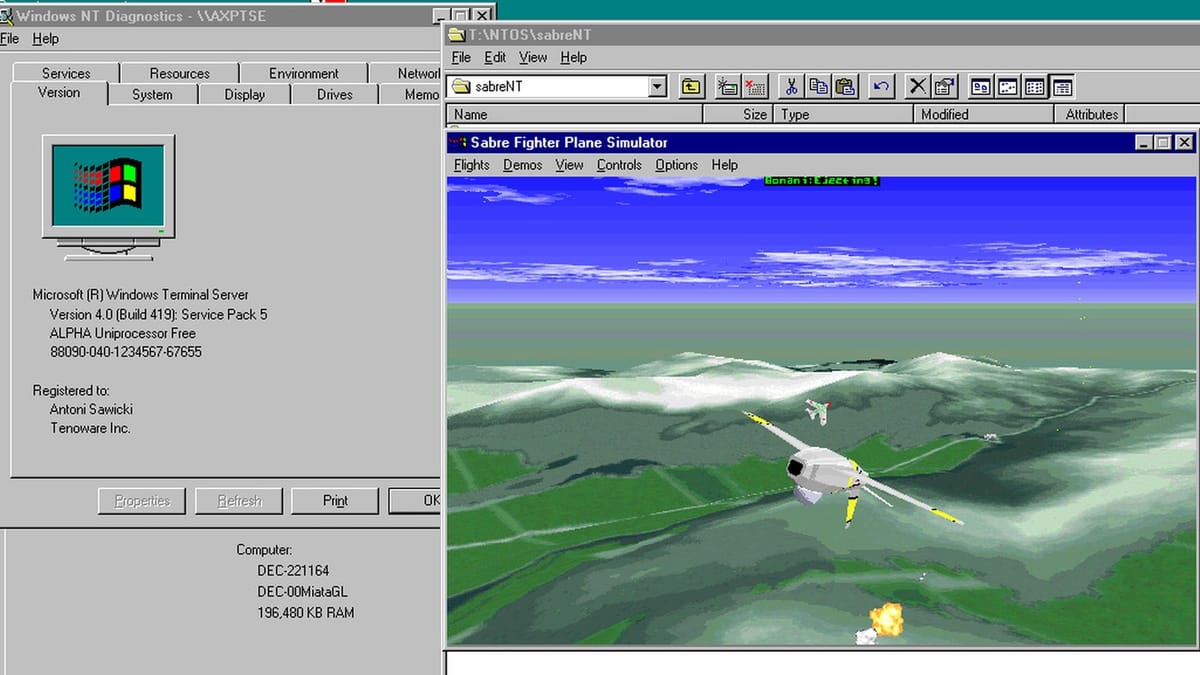
Software engineer Antoni Sawicki has released new ports of SABRE, an obscure 1990s combat flight simulator. The new builds make the game playable on vintage Windows NT RISC architectures and modern Apple Silicon Macs. Sawicki published the updated files on GitHub. These releases bring Dan Hammer's open-source project to a wider range of hardware than it ever officially supported.
I had a DEC Alpha in the late 90s, so I love seeing people keep NT 4.0 RISC alive. Microsoft originally built Windows NT to be platform-independent. It supported Alpha, MIPS, and PowerPC processors before the company eventually abandoned them to focus entirely on x86. Finding software that actually runs natively on these alternative architectures today is difficult.
SABRE originally launched in 1997 as a labor of love for Linux and Windows. The game focuses mostly on early jet combat from the Korean War. Players can pilot the F-86 SabreJet and the MiG-15. It also includes World War II-era propeller planes like the P-51 Mustang and Yak-9. The project was originally hosted at sabre.cobite.com before the site eventually went dark. The GPL source code survived because someone uploaded it to GitHub years later.
Downgrading the code
Sawicki (known online as Tenox) explained in a guest post on Virtually Fun that an Alpha AXP version of the game had been floating around for a while. However, there were no existing builds for MIPS, PowerPC, Itanium, or ARM.
To fix this, he took the existing Visual Studio 2008 codebase and downgraded it. He managed to compile the code using Visual Studio 4. This older development environment allowed him to successfully build the game for Alpha AXP, MIPS, and PowerPC.
The process of backporting code to a 30-year-old compiler is usually a nightmare of missing libraries and broken dependencies. Sawicki noted that he used the "help of robots" to get the VS2008 code ready for VS4. It works, which is the nicest thing I can say about wrangling vintage Microsoft compilers.
High frames on slow machines
The resulting builds run surprisingly well. According to Sawicki, the game maintains a high frame rate even on the slowest NT RISC machines.
SABRE was originally designed to run on basic 1990s hardware without requiring expensive 3D accelerator cards. It relied entirely on software rendering. That efficiency translates perfectly to vintage RISC workstations today. If you do not have physical MIPS hardware sitting on your desk, the new MIPS build works perfectly fine through QEMU emulation.
Apple Silicon gets a port too
Sawicki did not stop at vintage hardware. He also released a macOS port that runs natively on Apple Silicon.
This gives the obscure flight simulator a bizarre hardware footprint. You can play it on a 1996 DEC Alpha workstation or a 2024 M3 MacBook Pro. The macOS version is available in a separate GitHub repository from the Windows NT builds.
Open-source games from the 1990s often disappear when their original hosting sites expire. It is good to see this one survive long enough to run on an M-series chip.
Comments ()